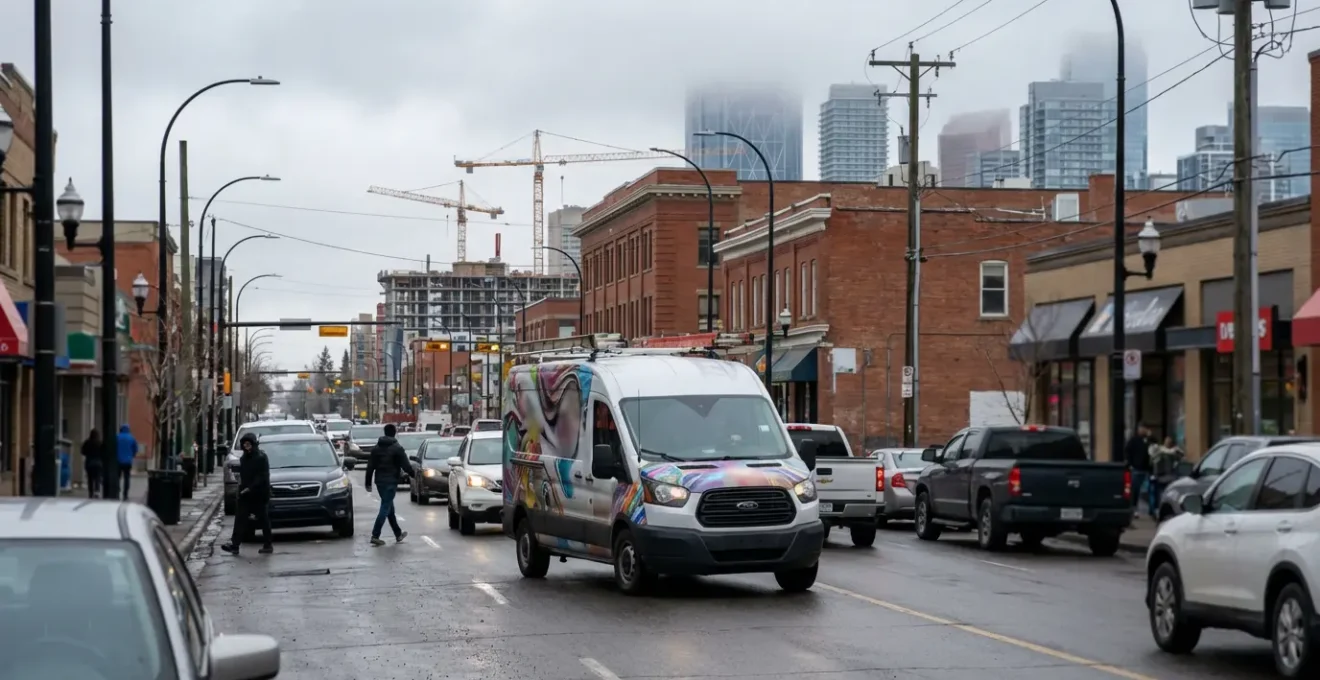
Last month, a contractor called me frustrated. He’d spent $1,800 on Facebook ads over three months. Leads were thin. Meanwhile, his two trucks sat in driveways across Calgary every single day—completely blank. That’s thousands of missed impressions, gone. Working with Calgary businesses, I’ve seen this story repeat itself. Your work vehicle isn’t just transportation. It’s a mobile billboard you’re already paying for.
Vehicle Graphics ROI in 30 Seconds
- A single wrapped vehicle generates 30,000-70,000 impressions daily
- Cost per thousand impressions: roughly $0.48 vs $3-20 for billboards and digital ads
- Quality vinyl wraps last 5-7 years with proper maintenance
- Your phone number in large letters beats clever slogans every time
Why Your Work Vehicle Is Your Most Underused Marketing Asset
I worked with a plumbing company owner in southeast Calgary last year. Mike had been in business for five years. Good reputation, steady referrals. But when I asked about his marketing, he shrugged. “Word of mouth works fine.” His single service van was plain white with a magnetic sign that kept falling off. He was invisible.
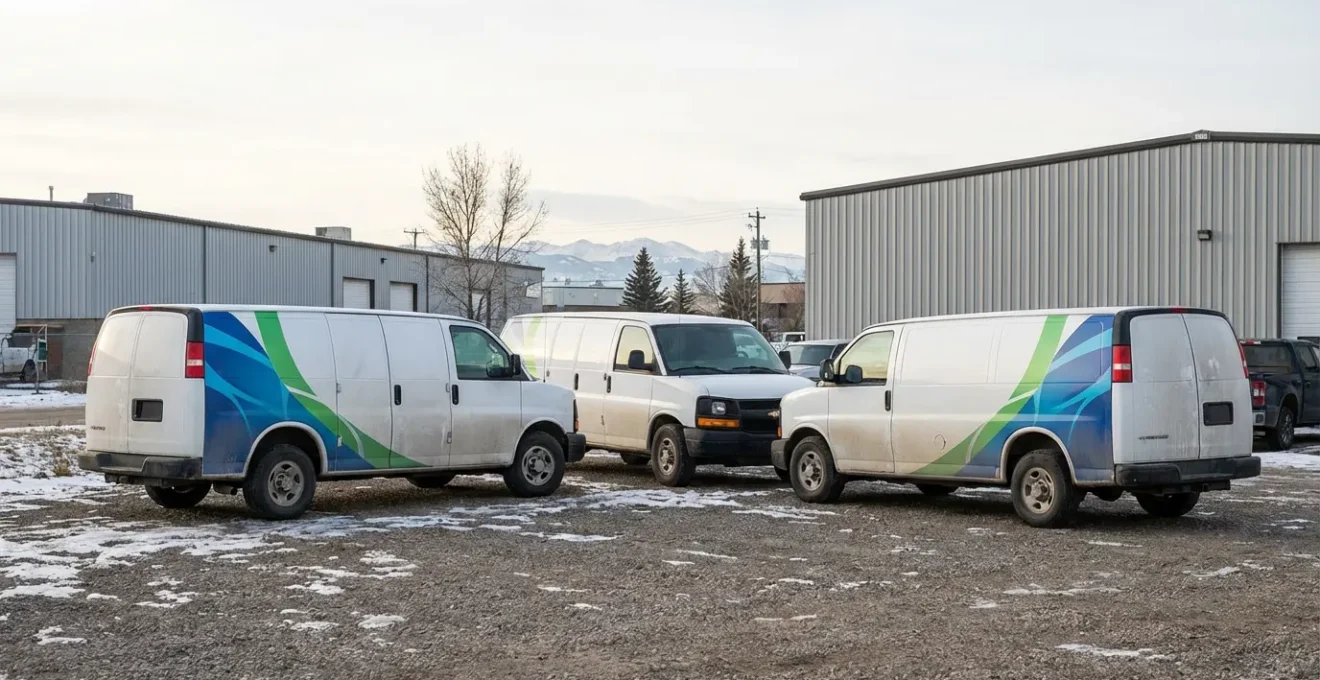
Here’s what Mike didn’t realize: according to 2025 vehicle wrap statistics, a wrapped vehicle generates between 30,000 and 70,000 impressions per day. That’s not a typo. Every time you drive to a job site, park in a neighbourhood, or sit in traffic on Deerfoot Trail, people see your brand. Working with a professional graphics provider like boldsigns.com transformed Mike’s plain van into a rolling advertisement that worked while he worked.
30,000-70,000
daily impressions per wrapped vehicle depending on driving routes
Within three months of wrapping his van, Mike started getting calls from people who said they’d seen his truck in their neighbourhood. No ad spend. No algorithm changes. Just consistent visibility where his customers actually live. The projects I’ve worked on show this pattern repeatedly—especially for service businesses operating in residential areas across Calgary and surrounding communities.
The Real Cost Per Impression (And Why It Beats Digital Ads)
Business owners ask me about ROI constantly. Fair question. When you’re weighing where to put your marketing dollars, numbers matter. What frustrates me most is when I see companies dumping money into channels that can’t compete with what’s sitting in their parking lot.
The comparison isn’t even close. According to 2023 OAAA advertising cost data, vehicle wraps deliver a cost per thousand impressions of roughly $0.36 to $0.77. Compare that to what you’d pay elsewhere:
| Advertising Channel | Typical CPM (Cost Per 1,000 Impressions) | Duration |
|---|---|---|
| Vehicle Wrap | $0.36-$0.77 | 5-7 years |
| Billboard | $3-$20 | 1-3 months |
| Facebook/Digital Ads | $7-$21 | Campaign period only |
| Newspaper Ad | $15-$20 | Single issue |
My take, and I stand by it: for local service businesses, vehicle graphics offer the best return per dollar spent. Your wrap works every single day without monthly fees. No algorithm changes affecting reach. No boosting required. And unlike digital advertising where you’re competing with endless scroll, a vehicle in someone’s neighbourhood feels local and trustworthy. If you’re exploring how different advertising formats compare, understanding the impact of digital signage in retail environments can also inform your overall strategy.
The math gets even better with multiple vehicles. A fleet of three trucks can generate millions of impressions annually. That’s brand saturation without the recurring media buy.
Three Design Mistakes That Kill Your Mobile Billboard
Honestly, I’d skip the fancy design concepts. The mistake I see most often with Calgary businesses is treating vehicle graphics like a brochure. Cramming in every service, every tagline, every phone number format. On the ground, the reality is different. At highway speeds, drivers have maybe three to five seconds. Cluttered designs fail.
The Readability Test Your Graphics Might Fail
If you can’t read your phone number from 30 feet away in 3 seconds, neither can anyone in traffic. Walk across a parking lot and check. Most designs that looked great on screen fail this basic test.
The second killer is poor colour contrast. I helped Sarah, a florist in Kensington, last fall. Her initial design used soft pastels—beautiful for bouquets, invisible on the road. It took two revisions to find the right colour pop. Her delivery van needed to stand out against grey Calgary skies and competing visual noise. Sometimes the first design isn’t the winner. Better to get it right than fast.
Kensington Florist Design Revision
I worked with Sarah through a Valentine’s Day deadline. Her pastel wrap mockup got lost in traffic during our test drive. We shifted to bold magenta accents with high-contrast white text. Final wrap cost slightly more due to the rushed timeline, but the ROI exceeded expectations—she tracked new customer mentions directly to people spotting her van in Bridgeland and Inglewood.
Third mistake: illegible contact information. According to signage readability best practices, the rule is one inch of letter height for every ten feet of viewing distance. For a vehicle seen from 50 feet away in traffic, that means five-inch minimum letters for your phone number. I always tell clients: your phone number in large, clear digits beats a clever tagline every time.
Vehicle Graphics Readability Check
-
Phone number readable from 30+ feet in 3 seconds -
High contrast between text and background colours -
Maximum two fonts used across entire design -
Core message communicates in under 5 seconds
Your Questions About Vehicle Graphics
How long do vehicle wraps actually last?
Quality vinyl wraps from manufacturers like 3M and Avery Dennison typically last 5 to 7 years with proper maintenance. According to 3M Canada wrap film specifications, vertical surfaces can carry warranties up to 8 years. Alberta’s temperature swings do stress materials more than milder climates, so material grade matters here. Regular cleaning with mild soap helps longevity.
Will a wrap damage my vehicle’s paint?
When professionally installed on factory paint in good condition, quality vinyl graphics can be removed without damage. The vinyl actually protects paint from UV exposure and minor abrasions. Problems occur with aftermarket paint jobs or if wraps bake onto surfaces for many years past warranty. Always work with certified installers who understand proper removal techniques.
How much does a vehicle wrap cost?
Costs vary significantly based on vehicle size, coverage level, and design complexity. Partial wraps with spot graphics cost considerably less than full wraps covering every surface. Rather than quoting ranges that may not apply to your specific vehicle, I recommend getting a consultation based on exactly what you need. Discuss whether full, partial, or spot graphics make sense for your budget and visibility goals.
How long does installation take?
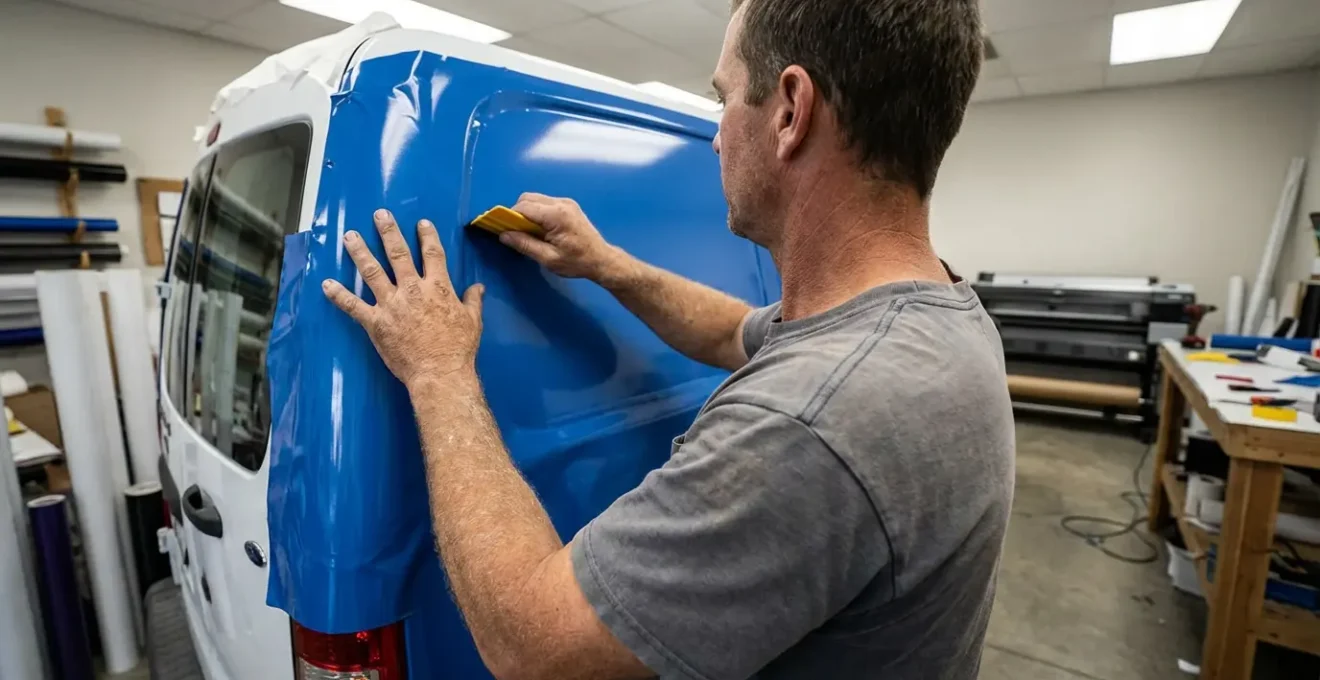
Installation timing depends on coverage level. Spot graphics and lettering can take a few hours. Full wraps typically require one to three days, allowing time for proper surface preparation and curing. In my experience, rushing installation leads to bubbling and lifting—especially in Calgary’s dry climate where adhesive behaviour changes with temperature.
Can wraps handle Alberta winters?
Yes, but material choice matters. Cast vinyl performs better than calendared vinyl in temperature extremes. Alberta throws everything at vehicles—chinooks swinging 20 degrees in hours, road salt, gravel spray. Discuss climate-appropriate vinyl options with your installer. Cheaper materials fail faster here than they would in Vancouver or Toronto.
Vehicle graphics aren’t complicated. They’re just underused. Your trucks are already on the road generating zero impressions or thousands—that’s the only difference between blank panels and branded ones. For more on building an integrated advertising approach, exploring a complete guide to launch your advertising campaign can help you coordinate vehicle graphics with your other channels.
What to Do Next
Your Vehicle Graphics Action Plan
-
Walk around your current vehicle from 30 feet away—what’s actually readable? -
Identify your top three neighbourhoods for daily visibility -
Request a consultation to discuss coverage options for your specific vehicle
Every day your vehicle sits in a driveway without graphics, you’re leaving impressions on the table. The investment pays back every kilometre you drive.