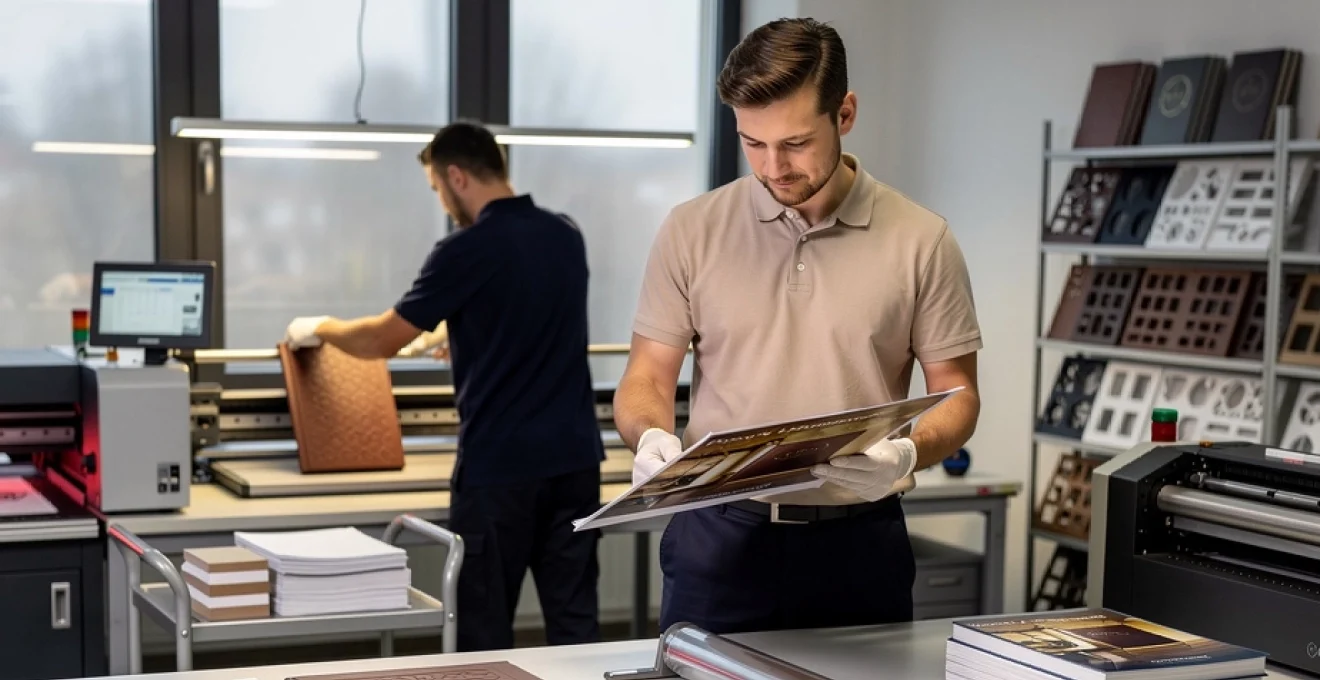
The difference between a standard printed piece and a premium material often lies in the finishing techniques applied during the final stages of production. Professional print finishing transforms basic materials into tactile experiences that command attention, convey quality, and create lasting impressions. These sophisticated processes go far beyond simple ink on paper, incorporating advanced surface treatments, structural enhancements, and precision cutting techniques that elevate printed materials to new levels of sophistication and effectiveness.
Modern finishing technologies have revolutionised how businesses approach their printed communications, packaging, and marketing materials. Whether it’s the velvet-like sensation of soft-touch coating or the dramatic visual impact of foil stamping, these techniques create multisensory experiences that engage customers on both visual and tactile levels. The strategic application of premium finishing methods can significantly increase perceived value, brand recognition, and customer engagement across various industries.
Surface treatment technologies for print enhancement
Surface treatments represent the cornerstone of premium print finishing, offering numerous ways to enhance both the aesthetic appeal and functional properties of printed materials. These technologies work by applying specialised coatings, varnishes, and protective layers that not only improve appearance but also extend durability and create unique tactile experiences. The selection of appropriate surface treatments depends on factors including substrate type, intended use, environmental conditions, and desired visual effects.
UV spot varnishing applications on coated paper stocks
UV spot varnishing creates striking contrast effects by applying high-gloss coating to specific areas while leaving surrounding regions matte or uncoated. This technique utilises ultraviolet light to instantly cure liquid varnish, creating a durable, glossy finish that resists scratching and wear. The process allows for precise control over which design elements receive enhancement, making it ideal for highlighting logos, product images, or key text elements.
The technique works exceptionally well on coated paper stocks, where the smooth surface provides optimal adhesion and visual impact. Premium business cards, luxury packaging, and high-end brochures frequently incorporate UV spot varnishing to create sophisticated visual hierarchies. The contrast between glossy varnished areas and matte backgrounds creates depth and dimension that immediately draws the eye to important design elements.
Aqueous coating systems for digital print substrates
Aqueous coatings provide an environmentally friendly alternative to traditional solvent-based finishes, offering excellent protection and enhancement for digitally printed materials. These water-based coatings can be applied inline during the printing process or as a separate finishing operation, providing flexibility in production workflow. The technology excels in protecting digital prints from fingerprints, moisture, and UV damage while enhancing colour saturation and overall print quality.
Modern aqueous coating systems offer various finish options, from high-gloss to satin and matte effects. The coatings bond exceptionally well with digital substrates, creating uniform coverage without affecting print registration or colour accuracy. Direct mail pieces, catalogues, and presentation materials benefit significantly from aqueous coating applications, which improve handling characteristics and extend product lifespan.
Lamination processes using polyethylene terephthalate films
Lamination with PET films provides superior protection and premium aesthetics for high-value printed materials. The process involves bonding transparent or printed films to substrates using heat, pressure, and adhesive systems. PET lamination offers exceptional clarity, dimensional stability, and resistance to moisture, chemicals, and UV radiation. This makes it particularly valuable for outdoor applications, food packaging, and materials requiring long-term durability.
The technique allows for various visual effects, including gloss, matte, and textured finishes. Some PET films incorporate special properties such as anti-microbial treatments, scratch resistance, or thermal stability. Menu cards, identification materials, and premium packaging frequently utilise PET lamination to achieve both functional protection and enhanced visual appeal.
Soft-touch coating applications with tactile polyurethane finishes
Soft-touch coating creates a luxurious, velvet-like surface texture that immediately communicates premium quality. This polyurethane-based finish transforms ordinary paper and cardboard into materials that feel expensive and sophisticated. The coating process involves applying specialised formulations that
creates a low-sheen, rubberised feel once cured. Because soft-touch coatings subtly diffuse light, they reduce glare while intensifying colour richness, resulting in deep blacks and sophisticated tonal transitions. This type of premium finishing is particularly effective on cover-heavy applications where first impressions count, such as luxury brochures, rigid presentation folders, and high-end retail packaging.
From a production standpoint, soft-touch polyurethane coatings require controlled application and curing conditions to avoid streaking or uneven texture. You also need to consider how this finish will interact with other surface treatments; for example, combining soft-touch with spot UV varnish or foil stamping can create dramatic contrast between velvety backgrounds and glossy or metallic highlights. For brands aiming to signal exclusivity and tactile refinement, integrating soft-touch coating into the print specification is one of the most powerful ways to elevate perceived value.
Advanced binding and structural reinforcement methods
While surface treatments enhance how printed materials look and feel, binding and structural reinforcement determine how they perform over time. Premium binding methods influence not only durability but also how comfortable a piece is to handle, how fully it can open, and how professional it appears in use. Choosing the right binding system is therefore as crucial as selecting paper or print technology, especially for long-lived materials such as catalogues, annual reports, and high-end presentation documents.
Advanced binding technologies combine engineered adhesives, precise mechanical processes, and thoughtful structural design. When these elements are aligned, the result is a printed product that withstands repeated handling, maintains its shape, and communicates attention to detail in every page turn. Whether you are producing short-run coffee table books or robust training manuals, understanding modern binding options helps you specify solutions that look premium and function reliably.
Perfect binding with PUR hot-melt adhesive systems
Perfect binding with PUR (polyurethane reactive) hot-melt adhesive has become the gold standard for high-quality books and catalogues that need both strength and flexibility. Unlike traditional EVA hot-melt glues, PUR adhesives chemically cross-link as they cure, forming an exceptionally strong bond with coated, uncoated, and digitally printed stocks. This means pages are far less likely to fall out or crack at the spine, even when the publication is opened flat or subjected to heavy use.
PUR perfect binding is ideal for product catalogues, premium magazines, lookbooks, and annual reports that demand a sleek, square spine and a professional bookshelf presence. Because PUR can penetrate less porous coatings and synthetic stocks, it’s also well suited to mixed-media projects that combine different paper types. From a user perspective, the ability to open a bound piece wider without breaking the spine significantly improves readability and the overall premium feel.
Saddle-stitching techniques for premium magazine production
Saddle-stitching remains one of the most cost-effective binding solutions, but when executed with precision it can also support premium magazine production. In this method, folded sections are nested together and secured along the fold with wire stitches, creating a clean, low-profile spine. For publications up to around 64 pages (depending on paper weight), saddle-stitching delivers excellent lay-flat performance and a smooth page flow.
High-end results come from attention to details such as trim accuracy, stitch positioning, and creep compensation, which ensures inner pages align perfectly at the fore-edge. You can further elevate saddle-stitched materials with heavier cover stocks, soft-touch or matte lamination, and specialty inks on the outer cover. This approach is particularly effective for premium newsletters, slim product magazines, event programmes, and lookbooks where a refined yet economical binding solution is required.
Case binding integration with headband and tailband elements
Case binding, commonly used for hardback books, portfolios, and archival volumes, offers the highest level of structural integrity and perceived value. In this process, book blocks are sewn or glued, then encased in rigid covers made from board wrapped with paper, cloth, or synthetic materials. Integrating headbands and tailbands—decorative and functional fabric strips at the top and bottom of the spine—further enhances the premium aesthetic while providing additional reinforcement.
For brands creating limited-edition publications, commemorative books, or luxury product catalogues, case binding with headband and tailband details signals craftsmanship and longevity. The rigid cover protects internal pages, while options such as foil stamping, debossing, or fabric coverings reinforce a tactile, upmarket impression. If you want your printed piece to feel more like a keepsake than a disposable brochure, case binding is often the most effective structural choice.
Wire-o and spiral binding for professional presentation materials
Wire-O and spiral binding systems combine practicality with a clean, professional appearance, making them ideal for materials that must open fully and lie flat on a desk. Spiral binding uses a continuous plastic or metal coil threaded through punched holes, while Wire-O employs a double-loop wire comb that creates a more angular, architectural look. Both options allow pages to rotate through 360 degrees without stressing the spine, enhancing usability in everyday working environments.
These premium binding methods are particularly effective for training manuals, technical guides, financial presentations, and sales pitch books. They support easy note-taking, photocopying, and reference use, which can be crucial during client meetings or workshops. You can further elevate Wire-O and spiral-bound documents with thicker covers, clear protective overlays, or integrated tab dividers to organise content and reinforce a high-end, professional impression.
Specialised paper selection and substrate enhancement
The choice of paper or substrate is the foundation upon which all other print finishing techniques build. Specialised papers not only influence colour reproduction and image sharpness but also affect how coatings, laminates, and embellishments perform. A premium print project starts with asking: what should this piece feel like in the hand, and how should it behave in real-world use? The answers help guide decisions around weight, texture, opacity, and environmental credentials.
High-end applications often rely on heavyweight coated art papers, uncoated tactile stocks, textured boards, or synthetic substrates engineered for durability. Substrate enhancement techniques such as priming for digital presses, corona treatment for plastics, or pre-foiling for metallic effects ensure consistent adhesion and finish quality. As sustainability moves higher on brand agendas, recycled and FSC-certified papers, along with plastic-free barrier boards, are increasingly used to deliver a premium, eco-conscious message.
Precision die-cutting and structural design elements
Precision die-cutting and structural design transform flat printed sheets into engaging three-dimensional objects. From simple rounded corners to complex pop-up mechanisms, these techniques add physical interaction that digital media cannot replicate. By carefully engineering cuts, folds, and apertures, you can guide how users handle the piece, where their attention is drawn, and how they experience the brand story.
Advanced paper engineering combines structural know-how with accurate cutting technologies to maintain stability while delivering visual drama. Whether you are designing presentation folders, retail display pieces, premium packaging, or interactive mailers, precision die-cutting allows you to step beyond the standard rectangle and into a more memorable, tactile space. When integrated with coatings, foils, and embossing, structural elements can turn an ordinary printed sheet into a high-impact, experiential object.
Laser die-cutting applications for intricate paper engineering
Laser die-cutting enables levels of detail and complexity that are difficult or impossible to achieve with conventional steel rule dies. Using a focused laser beam to cut or etch the substrate, this technique can produce fine filigree patterns, micro-perforations, and delicate cut-outs with exceptional accuracy. Because there is no physical die to manufacture, laser cutting is particularly attractive for short runs, prototypes, and personalised projects where design changes are frequent.
Applications range from intricate invitation cards and premium packaging sleeves to detailed window patterns in brochures and presentation covers. Laser-cut apertures can reveal underlying colours, textures, or metallic foils, adding depth and dimension without additional material layers. As with any precision process, careful consideration of paper weight, fibre direction, and heat sensitivity is essential to prevent charring or warping and maintain a crisp, premium finish.
Embossing and debossing techniques using steel rule dies
Embossing and debossing introduce sculptural relief into printed materials, creating an immediate tactile signal of quality. Using custom steel rule or brass dies, selected areas of the substrate are either raised (embossed) or recessed (debossed) through controlled pressure. This three-dimensional effect works particularly well on heavier stocks, where the depth of impression can be more pronounced without compromising structural integrity.
Premium applications include brand marks on packaging, title treatments on book covers, and pattern textures on presentation folders or certificates. When combined with foil stamping or spot varnish, embossed and debossed details catch the light and invite touch, turning simple graphics into physical experiences. To maintain consistency across a production run, it is important to specify accurate registration, appropriate die depth, and sufficient make-ready pressure, especially when working with multi-layer covers or laminated materials.
Foil stamping integration with hot stamp dies
Foil stamping uses heat, pressure, and metallic or pigmented foils to create highly reflective or vividly coloured accents on printed materials. Custom hot stamp dies transfer the foil onto the substrate with precise registration, resulting in crisp edges and consistent coverage. Unlike metallic inks, foils provide a uniform, mirror-like finish that remains stable regardless of ink density or drying variables.
This technique is widely used on luxury packaging, certificates, invitations, and high-end stationery to communicate prestige and attention to detail. You can choose from standard gold and silver foils, coloured metallics, holographic patterns, or even clear foils for subtle gloss effects on unprinted areas. For maximum impact, designers often pair foil stamping with embossing, creating raised metallic elements that both catch the eye and feel distinctly premium under the fingertips.
Perforating and scoring methods for interactive print features
Perforating and scoring might seem like purely functional processes, but when used strategically they can add interactive and structural value to premium print projects. Scoring creates controlled crease lines that enable clean, accurate folds without cracking toner or ink layers—essential for thick or coated stocks. Perforating introduces rows of tiny holes that allow sections to be neatly torn away, opening up possibilities for tear-off forms, vouchers, or expandable components.
Premium direct mail campaigns, event invitations, and multi-part brochures often use perforations to reveal hidden content or detachable elements, increasing user engagement. Imagine a mailer where the recipient tears along a perforated strip to reveal a metallic-foiled interior panel—this simple act of interaction can significantly increase recall and perceived value. Ensuring that scores and perforations are correctly aligned, set at appropriate depths, and matched to paper weight is key to maintaining both functionality and a polished, high-end appearance.
Quality control protocols and print finishing standards
As finishing processes become more complex, rigorous quality control is essential to maintain consistent, premium results. Each additional coating, laminate, fold, or embellishment introduces potential points of failure, from misregistration and adhesion issues to surface defects and cracking. Establishing robust quality control protocols, aligned with recognised print finishing standards, helps ensure that what leaves the bindery matches the original design intent and brand expectations.
Effective quality control typically includes in-process checks, final inspections, and documented tolerances for colour, alignment, trimming, and binding integrity. Visual assessments are combined with mechanical tests—such as rub resistance for coatings, pull tests on binding, or fold endurance checks—to simulate real-world handling. By implementing standard operating procedures and training staff to identify issues early, you reduce waste, avoid costly reprints, and protect the premium perception of your printed materials.
Cost-effective premium finishing solutions for small-run productions
Premium finishing has traditionally been associated with large production runs and significant budgets. However, advances in digital printing, modular coating units, and on-demand finishing equipment now make high-end effects accessible even for small batches. The key is choosing techniques and materials that deliver maximum impact with minimal setup cost—especially important for short-run catalogues, boutique packaging, prototypes, and personalised marketing pieces.
Digital spot UV, short-run foil using sleeking films, and laser die-cutting are examples of technologies that minimise tooling expenses while still creating a luxe, tactile experience. For many projects, combining one or two carefully chosen finishes—such as soft-touch lamination plus a single foil colour—can achieve a premium look without overextending the budget. When you match finishing methods to run length, target audience, and lifecycle of the piece, you can deliver print that feels high-end, even at modest volumes, and maximise return on every production pound or dollar spent.