# How Digital Twins Are Transforming Business Decision-Making
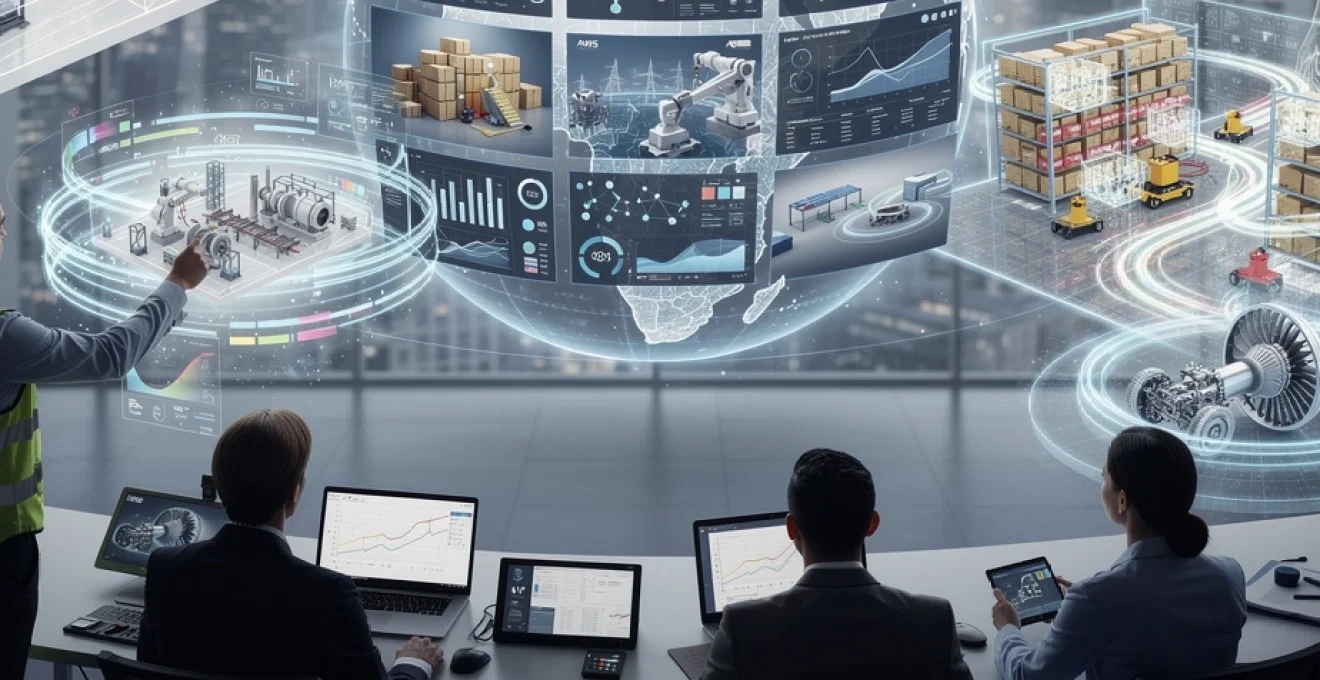
The business landscape has shifted dramatically in recent years, with organisations facing unprecedented levels of complexity and uncertainty. Traditional forecasting methods and historical data analysis often fall short when attempting to navigate rapidly changing markets, supply chain disruptions, and evolving customer demands. In this context, digital twin technology has emerged as a revolutionary approach to decision-making, offering business leaders the ability to simulate, test, and optimise strategies in a risk-free virtual environment before implementing them in the real world. This technology, which creates dynamic virtual replicas of physical assets, processes, or entire systems, is fundamentally changing how companies approach strategic planning, operational efficiency, and innovation. From manufacturing floors to healthcare facilities, digital twins are providing unprecedented visibility into complex operations, enabling predictive maintenance, and unlocking entirely new business models that were previously unimaginable.
Digital twin technology architecture and core components
Understanding the foundational architecture of digital twin technology is essential for appreciating its transformative potential in business decision-making. At its core, a digital twin represents a sophisticated integration of multiple technological layers that work in concert to create an accurate, real-time virtual representation of physical assets or processes. The architecture typically comprises several interconnected components, each serving a critical function in the overall ecosystem.
The technological foundation begins with data acquisition systems that continuously collect information from the physical world, followed by processing layers that transform raw data into actionable insights. Cloud computing platforms provide the computational power necessary to handle massive data volumes, whilst advanced analytics engines apply machine learning algorithms to identify patterns and predict future states. The integration of these components creates a feedback loop where insights generated from the digital twin can inform decisions that subsequently affect the physical counterpart, creating a continuous cycle of improvement and optimisation.
Iot sensor networks and Real-Time data integration layers
The lifeblood of any digital twin system is the continuous flow of real-time data from its physical counterpart. Internet of Things (IoT) sensor networks form the sensory system of digital twins, capturing everything from temperature and vibration to pressure, humidity, and performance metrics. These sensors are strategically deployed across assets, creating a comprehensive monitoring framework that feeds information into the digital twin at regular intervals, sometimes as frequently as milliseconds for critical applications.
The data integration layer serves as the nervous system, aggregating information from diverse sources including legacy systems, enterprise resource planning (ERP) platforms, manufacturing execution systems (MES), and external data feeds such as weather services or market information. This layer must handle data normalisation, ensuring that information from disparate sources can be reconciled and interpreted consistently. Edge computing capabilities are increasingly being deployed at this layer to process data locally before transmission, reducing latency and bandwidth requirements whilst enabling faster decision-making for time-critical applications.
3D modelling engines and spatial computing frameworks
Visual representation forms a crucial component of digital twin technology, transforming abstract data into intuitive, interactive models that decision-makers can explore and manipulate. Advanced 3D modelling engines create geometrically accurate representations of physical assets, incorporating detailed specifications, materials properties, and spatial relationships. These models go beyond static visualisations, incorporating dynamic elements that reflect real-time changes in the physical environment.
Spatial computing frameworks enable users to interact with digital twins in immersive ways, whether through traditional computer interfaces, augmented reality (AR) headsets, or virtual reality (VR) environments. This spatial dimension proves particularly valuable when assessing complex systems where physical relationships and spatial constraints significantly impact performance. For instance, facility managers can virtually walk through a digital twin of a building to identify optimal locations for new equipment or assess the impact of layout changes on operational efficiency.
Machine learning algorithms for predictive analytics
The true power of digital twins lies not merely in mirroring current conditions but in forecasting future states and outcomes. Machine learning algorithms analyse historical patterns and real-time data to identify trends, detect anomalies, and predict future behaviour with remarkable accuracy. Supervised learning models can be trained on historical failure data to recognise the precursor signals that indicate impending equipment breakdowns, enabling predictive maintenance strategies that prevent costly downtime.
Unsupervised learning techniques discover hidden patterns and relationships within operational data that might not be immediately apparent to human observers. Reinforcement learning algorithms can optim
Reinforcement learning algorithms can optimise control strategies over time by continuously testing different actions within the digital twin and learning which decisions deliver the best performance. In effect, the twin becomes a sandbox where AI agents can safely “experiment” with operational changes before they are applied in the real world. As these models mature, they support not only predictive analytics but also prescriptive recommendations, suggesting optimal interventions for maintenance, resource allocation, or process adjustments. For business leaders, this means that decisions once based on gut feeling can now be grounded in robust statistical evidence and continuously updated insights.
Cloud infrastructure requirements: AWS IoT TwinMaker vs azure digital twins
To operate at scale, digital twins require a robust cloud infrastructure capable of handling high-frequency data ingestion, complex simulations, and secure integrations with enterprise systems. Two of the leading platforms in this space are AWS IoT TwinMaker and Azure Digital Twins, each offering a slightly different approach to building and managing digital twin environments. Understanding their capabilities helps organisations select an architecture that aligns with their digital strategy, existing technology stack, and regulatory requirements.
AWS IoT TwinMaker focuses on integrating data from IoT sensors, video streams, and existing data stores into a unified digital twin model, with tight integration into the broader AWS ecosystem. Azure Digital Twins, by contrast, emphasises a graph-based representation of environments, allowing businesses to model complex relationships between people, places, and devices using its Digital Twins Definition Language (DTDL). Both platforms support real-time analytics, event-driven architectures, and integration with AI services, but they differ in tooling, pricing models, and ecosystem maturity. When evaluating options, you should consider factors such as latency requirements, data residency, integration with existing ERP/MES systems, and in-house cloud expertise.
Predictive maintenance and asset performance optimisation through digital twins
One of the most mature and widely adopted use cases for digital twins is predictive maintenance and asset performance optimisation. Instead of relying on fixed maintenance schedules or reacting to failures after they occur, organisations can use digital twins to monitor asset health in real time, forecast failures, and schedule interventions at the optimal moment. This shift from reactive to proactive maintenance not only reduces unplanned downtime but also extends asset lifespan, optimises spare parts inventory, and improves overall equipment effectiveness (OEE).
Across sectors such as manufacturing, energy, aviation, and transportation, digital twins are being deployed to model the full lifecycle of critical equipment—from commissioning to decommissioning. By continuously updating the twin with live sensor data, historical performance records, and contextual information (such as operating conditions or environment), businesses gain a rich, data-driven understanding of asset behaviour. In turn, this enables more intelligent decision-making around maintenance planning, capital investment, and risk management.
Siemens MindSphere implementation for manufacturing equipment monitoring
Siemens MindSphere is a cloud-based, industrial IoT operating system that illustrates how digital twins can be implemented for large-scale equipment monitoring. By connecting machines, production lines, and entire plants to MindSphere, manufacturers create digital twins that consolidate operational data, event logs, and condition monitoring metrics into a single, coherent view. This integrated platform supports real-time dashboards, advanced analytics, and role-based access for engineers, operators, and managers.
In practice, a manufacturer might connect CNC machines, conveyors, and robotics systems to MindSphere via industrial gateways, with data such as vibration, motor current, and cycle times streamed into the cloud. MindSphere applications then analyse this data to identify abnormal patterns, benchmark machine performance across plants, and recommend optimal maintenance windows. For decision-makers, the result is a more transparent production environment where you can see, in one interface, how equipment health is trending and where to focus maintenance budgets for maximum impact.
Anomaly detection algorithms and failure prediction models
At the heart of predictive maintenance digital twins are anomaly detection and failure prediction algorithms. These models analyse sensor streams and historical maintenance records to learn what “normal” behaviour looks like, then flag deviations that may indicate early signs of wear, misalignment, or impending failure. Techniques range from simple statistical thresholds to advanced deep learning models such as autoencoders or recurrent neural networks.
For example, an autoencoder model might be trained on vibration and temperature data during normal operation. When the reconstruction error suddenly increases, it signals an anomaly that warrants investigation. Failure prediction models go a step further by estimating the remaining useful life (RUL) of a component, helping planners prioritise interventions. When combined with a digital twin, these insights are visualised in context—for instance, highlighting a specific pump in a 3D plant model that is likely to fail within two weeks if no action is taken. This contextualised insight makes it far easier for maintenance teams and management to act quickly and confidently.
GE predix platform for industrial asset lifecycle management
GE’s Predix platform offers another compelling example of digital twins for asset lifecycle management, particularly in sectors such as aviation, power generation, and oil and gas. GE developed digital twins for jet engines, gas turbines, and other capital-intensive assets, using Predix to collect operational data from equipment deployed in the field. These twins model everything from component-level stress and fatigue to fuel efficiency and emissions performance under different conditions.
By correlating operating conditions with asset degradation, Predix-based digital twins help asset owners determine optimal operating envelopes and maintenance strategies. Airlines, for instance, can use these models to compare the cost implications of different flight profiles or maintenance intervals, effectively “test-flying” strategies in the twin before committing to them in reality. According to industry reports, such implementations have delivered double-digit reductions in unplanned downtime and significant savings in maintenance, repair, and overhaul (MRO) costs, providing clear evidence of the strategic value of digital twin-driven decision-making.
Cost reduction metrics and downtime prevention analytics
To justify investment in digital twin technology, organisations must quantify the financial impact of predictive maintenance and asset optimisation. Typical metrics include reductions in unplanned downtime, improvements in mean time between failures (MTBF), and decreases in maintenance labour and spare parts consumption. McKinsey and other analysts have reported that predictive maintenance can reduce machine downtime by 30–50% and increase equipment lifespan by 20–40%, depending on the industry and implementation maturity.
Digital twins enhance these benefits by providing a granular view of where savings are realised and where further optimisation is possible. Downtime prevention analytics, for example, can simulate the impact of different maintenance strategies on production schedules and revenue. What happens to your quarterly output if a critical compressor fails unexpectedly versus being serviced during a planned shutdown? By running these scenarios through the digital twin, decision-makers can compare options side by side and select the strategy that minimises both operational risk and cost.
Supply chain simulation and logistics network optimisation
Beyond individual assets, digital twins are increasingly used to model entire supply chains and logistics networks. In a world of frequent disruptions—from geopolitical tensions to extreme weather events—having a virtual representation of your end-to-end supply chain can be a powerful strategic asset. Companies can simulate supplier failures, port closures, demand surges, or transportation delays, then evaluate contingency plans in a safe, virtual environment.
A supply chain digital twin brings together data from ERP systems, warehouse management systems (WMS), transport management systems (TMS), and external sources such as market forecasts or real-time traffic data. By continuously synchronising with the physical supply chain, the twin enables near real-time visibility into inventory levels, lead times, and bottlenecks. This allows you to move from static, annual planning to dynamic, scenario-based decision-making that responds to changing conditions as they unfold.
Dhl’s digital twin warehouses for inventory management
Logistics providers like DHL have been early adopters of digital twins for warehousing and inventory management. By creating virtual replicas of distribution centres, including racks, picking routes, conveyor systems, and worker movements, DHL can test new layouts, automation investments, or picking strategies before making changes on the ground. These twins are fed by data from barcode scanners, RFID tags, and IoT-enabled equipment, ensuring they reflect operational reality.
For example, a warehouse digital twin can simulate how introducing autonomous mobile robots (AMRs) will affect throughput, worker travel time, and error rates. It can also help optimise slotting strategies, determining which items should be stored closer to packing stations based on order frequency. The result is not only higher picking efficiency but also reduced congestion and safer working environments. From a decision-making perspective, warehouse managers gain a powerful tool to justify capital expenditures and to fine-tune operations in response to seasonal demand swings.
Route optimisation algorithms and demand forecasting models
In transportation and logistics, digital twins often rely on route optimisation algorithms and demand forecasting models to improve service levels while reducing costs. These models consider variables such as delivery time windows, vehicle capacities, traffic conditions, fuel prices, and service constraints to compute the most efficient routing plans. When embedded in a digital twin of the logistics network, they allow planners to explore “what-if” questions: What if fuel prices spike by 20%? What if we consolidate two regional hubs into one?
Demand forecasting models—often powered by machine learning—further enhance the twin by predicting order volumes and product mix across regions and time periods. Combining these forecasts with constraint-based optimisation produces more resilient and cost-effective distribution plans. In industries with volatile demand, such as e-commerce, this integration of digital twins, route optimisation, and forecasting can be the difference between meeting customer expectations and facing stockouts or costly expedited shipments.
Real-time bottleneck identification and throughput analysis
One of the key strengths of digital twins in supply chain decision-making is their ability to identify bottlenecks in real time. By monitoring material flows, processing times, and queue lengths across the network, the twin can highlight where congestion is building up—whether in a sorting facility, at a cross-dock, or along a specific transport leg. Think of it as an MRI scan for your logistics network, revealing hidden constraints that spreadsheets often miss.
Throughput analysis within the digital twin helps operations teams test interventions such as adding temporary labour, re-routing shipments, or shifting cut-off times. Because these scenarios are evaluated in a virtual copy of the network, you can see their impact on service levels and costs before implementing them. Over time, this leads to a more agile logistics operation that can adapt quickly to disruptions, while continuously improving key performance indicators such as on-time delivery, load factor, and cost per shipment.
Product development acceleration with virtual prototyping
Digital twins also play a transformative role in product development, enabling companies to accelerate design cycles, reduce physical prototyping costs, and bring higher-quality products to market faster. By creating virtual prototypes that accurately represent physical behaviour under various conditions, engineers can test hundreds of design alternatives in a fraction of the time it would take to build and evaluate physical models.
Virtual prototyping with digital twins goes beyond traditional computer-aided design (CAD) by integrating real-world usage data, manufacturing constraints, and lifecycle considerations. This holistic view supports better decision-making across engineering, manufacturing, marketing, and after-sales service. In many organisations, the digital twin persists throughout the product lifecycle, evolving from a design prototype into an operational twin that informs future product iterations.
Dassault systèmes 3DEXPERIENCE platform for design iteration
The Dassault Systèmes 3DEXPERIENCE platform is a leading example of how digital twins support collaborative design and engineering. It allows teams to create highly detailed 3D models of products, assemblies, and production systems, all within a unified environment that connects designers, engineers, suppliers, and business stakeholders. These models serve as the foundation for digital twins that incorporate simulation, requirements management, and change tracking.
By using 3DEXPERIENCE, companies can quickly iterate on product designs, test different materials, and assess manufacturability early in the process. For instance, changing the thickness of a component or switching to a lighter alloy can be evaluated immediately for structural integrity, cost, and production complexity. Because the digital twin centralises data and context, cross-functional teams can make more informed trade-offs, reducing the risk of late-stage design changes that delay launches or inflate costs.
Computational fluid dynamics and finite element analysis integration
To accurately predict product behaviour, digital twins often integrate advanced simulation tools such as computational fluid dynamics (CFD) and finite element analysis (FEA). CFD models help engineers understand how fluids or gases flow through and around a product—critical for applications like automotive aerodynamics, HVAC systems, or medical devices. FEA, on the other hand, analyses how structures respond to forces, vibrations, and thermal stresses.
When these simulations are embedded in a digital twin, they enable a level of insight that physical prototypes alone cannot provide. You can test how a new car design performs in different wind conditions, or how a turbine blade responds to thermal cycling over years of operation, all in software. It’s akin to putting your product through a lifetime of use in a matter of hours. This not only accelerates development but also informs smarter design decisions that enhance reliability, safety, and customer satisfaction.
Tesla’s virtual manufacturing process validation
Tesla is frequently cited as a pioneer in using digital twins to validate manufacturing processes before hardware is built. By creating detailed virtual models of assembly lines, robotics configurations, and material flows, Tesla can simulate how a new vehicle model will move through production. These simulations test cycle times, robot reach, worker ergonomics, and buffer sizes, identifying bottlenecks or conflicts long before equipment is installed.
This approach drastically reduces commissioning time and costly rework on the factory floor. When changes are needed—such as introducing a new variant or adjusting takt time—the digital twin provides a rapid way to evaluate options and choose the best configuration. For decision-makers, Tesla’s use of virtual manufacturing validation demonstrates how digital twins can reduce risk and compress timelines in capital-intensive projects, providing a clear competitive advantage in time-to-market.
Smart city infrastructure planning and energy grid management
At the city scale, digital twins are emerging as powerful tools for urban planners, infrastructure operators, and policymakers. By creating virtual replicas of buildings, transport networks, utilities, and public spaces, city authorities can simulate the impact of new developments, policy changes, or environmental conditions on residents and services. In an era of rapid urbanisation and climate pressure, this capability is invaluable for making infrastructure decisions that are resilient, sustainable, and citizen-centric.
Smart city digital twins typically integrate data from geographic information systems (GIS), IoT sensors, building systems, and supervisory control platforms. They can be used to test scenarios such as new bus routes, zoning changes, flood mitigation measures, or energy efficiency programmes. For businesses operating within these cities—from real estate developers to energy providers—participating in or leveraging city-level twins opens up new avenues for collaboration and innovation.
Singapore’s virtual singapore project for urban development
One of the most advanced examples of a city-scale digital twin is Virtual Singapore, a dynamic 3D digital model and collaborative platform that models the entire city-state. Built with high-resolution 3D data, real-time information, and semantic details about buildings and infrastructure, Virtual Singapore enables government agencies, researchers, and private companies to simulate a wide range of urban scenarios.
Use cases include assessing the impact of new high-rise developments on wind flow and heat distribution, planning emergency evacuation routes, and exploring optimal locations for solar panels based on shading analysis. For decision-makers, Virtual Singapore functions like a “flight simulator” for the city, allowing them to understand the complex interplay between urban design, environment, and human behaviour before implementing policies or investments.
Building information modelling (BIM) integration with digital twins
Building Information Modelling (BIM) provides a rich digital representation of the physical and functional characteristics of buildings and infrastructure assets. When BIM models are integrated into digital twins, they become living, continuously updated representations rather than static design artefacts. This integration bridges the gap between construction and operations, supporting better decisions across the entire asset lifecycle.
For example, a BIM-based digital twin of a hospital can track real-time occupancy, energy usage, and maintenance status for different zones. Facility managers can simulate layout changes to improve patient flow, or evaluate retrofits to meet carbon reduction targets. By aligning BIM models with IoT data and operational systems, organisations gain a powerful tool for ongoing optimisation—not just during construction but over decades of use.
SCADA systems and distributed energy resource optimisation
In the energy sector, digital twins are increasingly used to manage and optimise distributed energy resources (DERs) such as solar panels, wind turbines, battery storage, and electric vehicle charging stations. These assets are often monitored and controlled via SCADA (Supervisory Control and Data Acquisition) systems, which provide real-time telemetry and control capabilities. When SCADA data is fed into a grid-level digital twin, operators gain a holistic view of supply, demand, and network constraints.
This integrated twin allows utilities and grid operators to simulate different dispatch strategies, evaluate grid stability under varying conditions, and plan investments in infrastructure reinforcement or flexibility services. For instance, they can test how adding community batteries in specific locations might reduce peak loads or avoid costly substation upgrades. As more renewable energy comes online, digital twins help ensure that the grid remains reliable and efficient, while enabling new business models such as demand response and peer-to-peer energy trading.
Healthcare patient-specific models and precision medicine applications
In healthcare, digital twins are opening the door to truly personalised medicine by creating virtual models of individual patients, organs, or disease states. These patient-specific digital twins combine medical imaging, physiological data, genomics, and treatment histories to simulate how a particular individual might respond to interventions. Instead of relying solely on population averages, clinicians can use these models to tailor therapies, reduce risks, and improve outcomes.
As with other domains, the power of digital twins in healthcare lies in their ability to integrate diverse data sources into a coherent, dynamic model. Advances in AI, high-performance computing, and medical device connectivity are accelerating this trend, with early success stories in cardiology, oncology, and chronic disease management. For health systems and life sciences companies, digital twins provide not only clinical value but also strategic insight into resource allocation, care pathway design, and product development.
Cardiac digital twins for surgical planning and risk assessment
Cardiology is at the forefront of patient-specific digital twin development. Cardiac digital twins model the anatomy and electrophysiology of an individual’s heart, often using data from MRI, CT scans, and electrocardiograms (ECGs). These models can simulate how blood flows through the heart, how electrical impulses propagate, and how the heart will respond to interventions such as valve replacements, stent placements, or ablations.
Surgeons and cardiologists can use these simulations to plan complex procedures, assess the risk of complications, and choose the most appropriate devices or techniques. For example, by testing different valve sizes or positions in the digital twin, clinicians can minimise the risk of leakage or obstruction. This is akin to rehearsing surgery in a virtual environment that is uniquely tailored to the patient, leading to more informed consent discussions and, ultimately, better clinical outcomes.
Philips HealthSuite digital platform for remote patient monitoring
On the operational side of healthcare, platforms such as the Philips HealthSuite Digital Platform illustrate how digital twins support remote patient monitoring and chronic disease management. By connecting wearable devices, home monitoring equipment, and clinical systems, HealthSuite enables the creation of longitudinal digital profiles—or “twins”—of patients living with conditions such as heart failure, diabetes, or COPD.
These digital profiles track vital signs, activity levels, medication adherence, and symptom reports in near real-time. AI models can then detect early warning signs of deterioration, prompting care teams to intervene before hospitalisation is required. For healthcare organisations, this twin-driven approach supports a shift from episodic, hospital-based care to continuous, home-centred care, improving patient experience while reducing readmissions and overall costs.
Pharmacokinetic modelling and treatment response prediction
Another promising area is the use of digital twins in pharmacokinetics and treatment response prediction. Pharmacokinetic (PK) models describe how drugs are absorbed, distributed, metabolised, and excreted by the body. When these models are personalised using patient-specific data—such as liver and kidney function, genetic markers, and concomitant medications—they can form the basis of a digital twin that predicts how an individual will respond to a given therapy.
Clinicians and researchers can use these twins to simulate different dosing regimens, combination therapies, or treatment sequences, assessing efficacy and toxicity before administering drugs. In oncology, for instance, digital twins are being explored to predict tumour response to chemotherapy or immunotherapy, helping to select the most promising options while avoiding unnecessary side effects. As regulatory frameworks evolve and evidence accumulates, these models could become integral to precision medicine pathways, giving patients and providers a much clearer view of the likely benefits and risks of different treatment choices.