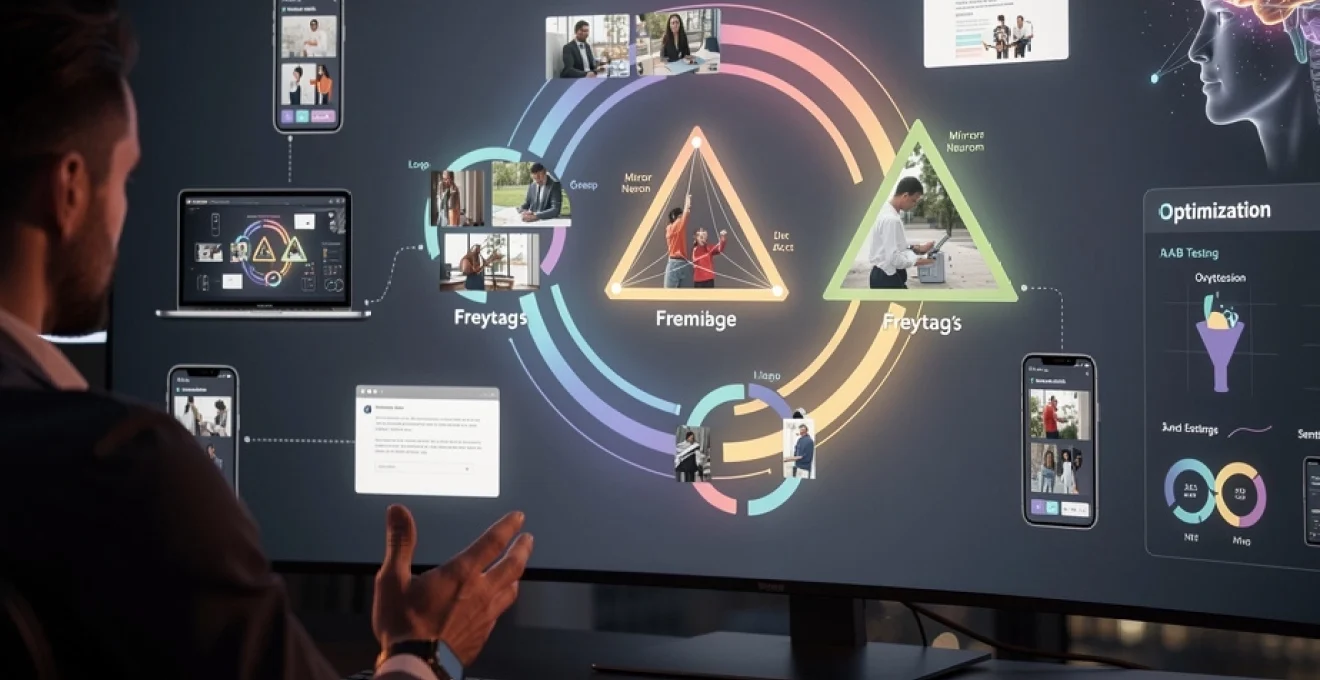
Digital communication has evolved far beyond simple information exchange. Today’s audiences crave meaningful connections and memorable experiences that resonate on an emotional level. Storytelling emerges as the cornerstone technique that transforms ordinary digital interactions into compelling narratives capable of driving engagement, building trust, and fostering lasting relationships with audiences across all platforms.
The human brain processes visual information 60,000 times faster than text, making stories particularly powerful in digital environments where attention spans average just 8 seconds. When crafted strategically, narratives activate multiple neural pathways simultaneously, creating deeper cognitive engagement and improved information retention. This neurological advantage positions storytelling as an essential skill for digital communicators seeking to cut through the noise of information overload.
Modern digital storytelling combines traditional narrative structures with data-driven insights, creating personalised experiences that speak directly to individual user journeys. The integration of psychological triggers with technological capabilities enables communicators to craft messages that not only inform but inspire action, whether that’s increasing brand loyalty, driving conversions, or building community engagement.
Narrative framework structures for digital content architecture
Successful digital storytelling relies on proven narrative frameworks that guide content architecture and ensure consistent messaging across multiple touchpoints. These frameworks provide the structural foundation upon which engaging digital experiences are built, offering communicators reliable blueprints for crafting compelling narratives that resonate with diverse audiences.
Joseph campbell’s hero’s journey implementation in digital campaigns
The Hero’s Journey framework translates exceptionally well to digital marketing campaigns, positioning the customer as the protagonist facing challenges and seeking transformation. This approach shifts focus from product features to customer empowerment, creating emotional investment in the narrative outcome. Digital campaigns utilising this framework typically begin with the customer’s ordinary world, introduce a challenge or need, and demonstrate how the brand serves as the mentor guiding them towards resolution.
Implementation involves mapping customer pain points to the “call to adventure” phase, where they recognise the need for change. The brand then appears as the wise guide, offering tools and wisdom rather than simply promoting products. This positioning builds trust and authority while maintaining customer agency throughout their journey. Social media campaigns particularly benefit from this approach, as each platform can represent different stages of the hero’s progression.
Three-act structure adaptation for social media storytelling
The classical three-act structure adapts naturally to social media storytelling constraints, providing clear narrative progression within limited attention spans. Act One establishes context and introduces the central tension or opportunity. Act Two develops the conflict and explores potential solutions, while Act Three delivers resolution and calls to action. This framework ensures every piece of content contributes to overarching narrative goals.
Platform-specific adaptations vary significantly: Instagram Stories might compress all three acts into a 15-second sequence, whilst LinkedIn articles can explore each act in greater depth. The key lies in maintaining narrative cohesion across varying content lengths and formats. Successful implementation requires understanding how each platform’s unique characteristics support different aspects of story progression.
Freytag’s pyramid application in email marketing sequences
Email marketing sequences benefit tremendously from Freytag’s dramatic structure, which builds tension gradually before reaching a climactic moment and resolution. The exposition introduces subscribers to the brand narrative, whilst rising action develops interest through valuable content and relationship building. The climactic moment typically coincides with a significant offer or call to action, followed by falling action that addresses objections and provides additional value.
This framework prevents email fatigue by ensuring each message serves a specific narrative purpose rather than simply promoting products. The dénouement phase often includes testimonials, case studies, or follow-up content that reinforces the decision to engage. Automated sequences can maintain narrative momentum over extended periods, nurturing relationships through consistent story progression.
Circular narrative techniques for brand consistency across platforms
Circular narratives create cohesive brand experiences by connecting endings with beginnings, establishing recurring themes that reinforce core messages across diverse digital touchpoints. This approach ensures brand consistency whilst allowing platform-specific content variations. The narrative circle enables audiences to enter the story at any point whilst maintaining comprehension of the overarching message.
Implementation involves identifying central brand themes that can be expressed through various formats and platforms whilst maintaining narrative coherence. User-generated content often completes these circles, with customer stories reinforcing brand narratives and creating authentic testimon
tomials that show the long-term impact of choosing your brand. Over time, this looping of narrative elements builds a recognisable story world around your organisation, where every touchpoint feels like a familiar chapter rather than a disconnected message.
Neurological response mechanisms to digital storytelling
Understanding how the brain responds to digital storytelling allows you to design content that works with, rather than against, human cognition. Effective digital communication does more than share information; it orchestrates attention, emotion and memory in a deliberate sequence. By aligning narrative choices with neurological response mechanisms, you can increase engagement rates, improve message recall and encourage meaningful user actions across channels.
Mirror neuron activation through visual narrative elements
Mirror neurons fire both when we perform an action and when we observe someone else performing it, making visual storytelling especially potent in digital communication. When you show a customer unboxing a product, navigating a dashboard or experiencing a transformation, viewers’ brains partially simulate that experience. This neural mirroring increases empathy and makes it easier for audiences to imagine themselves in the same scenario, which is critical when you want them to adopt a new behaviour or purchase decision.
To leverage mirror neuron activation in digital campaigns, prioritise visuals that depict concrete human actions rather than abstract concepts. Short-form videos, explainer animations and step-by-step GIFs can all place the viewer in the protagonist’s shoes. Ask yourself: if someone muted this video, could they still follow the story through actions alone? When the answer is yes, you are more likely to trigger embodied responses that support deeper engagement and higher conversion rates.
Oxytocin release triggers in user-generated content strategies
Oxytocin, often referred to as the “trust hormone,” plays a central role in bonding and prosocial behaviour, and it can be stimulated through emotionally resonant stories. Narratives that highlight vulnerability, support, kindness or shared struggle are especially effective at prompting oxytocin release. In digital communication, this response is frequently triggered by authentic user-generated content, where real people share real experiences in their own words and visuals.
Building user-generated content strategies around moments of care and transformation helps you tap into this neurochemical advantage. Invite customers to share stories about how your solution helped them overcome a specific challenge, support a loved one or achieve a personal milestone. Curating these narratives into themed campaigns—such as “before and after” journeys or “what I wish I’d known sooner” series—turns scattered testimonials into a cohesive storytelling ecosystem that builds trust at scale.
Dopamine-driven engagement loops in sequential story content
Dopamine is associated with anticipation and reward, making it central to how audiences interact with sequential digital content. Every time viewers encounter an unresolved question or cliffhanger, the brain anticipates future satisfaction, which can encourage them to return, click through or subscribe. Serialised storytelling in digital communication leverages this mechanism by delivering value in episodes, each promising a small but meaningful payoff.
You can design dopamine-driven engagement loops by structuring content as a series rather than isolated posts. For example, a multi-part LinkedIn article sequence that follows a client transformation case study can tease the next stage at the end of each instalment. Similarly, a product adoption journey on Instagram or TikTok can reveal progressive “levels” of mastery. The key is to balance suspense with satisfaction: each piece should resolve a short-term question while setting up a new one, keeping your audience curious but never frustrated.
Cognitive load theory applications in multi-platform storytelling
Cognitive load theory reminds us that the brain has limited processing capacity at any given moment, which is routinely tested in noisy digital environments. If your storytelling demands too much effort—through dense copy, cluttered visuals or convoluted narrative jumps—users simply disengage. Effective digital communication manages intrinsic, extraneous and germane cognitive load so that audiences can focus on what matters most: the core message and its relevance to their own story.
In practical terms, this means simplifying narrative elements when stories are spread across multiple platforms. Complex plot points and data-heavy explanations belong on channels where users expect depth, such as long-form blog posts or webinars. Social media snippets and email subject lines should instead convey one clear idea or emotion per touchpoint. Think of your multi-platform narrative as a well-organised museum: each room (channel) offers a manageable amount of information, but together they create a rich, coherent experience without overwhelming the visitor.
Cross-platform narrative synchronisation strategies
As audiences move fluidly between devices and channels, cross-platform narrative synchronisation becomes essential for coherent digital communication. Rather than duplicating the same message everywhere, strategic storytellers design a single overarching narrative that unfolds differently on each platform while remaining recognisably connected. This approach respects each channel’s strengths and user expectations, yet keeps the brand story consistent and easy to follow.
One effective strategy is to define a central “story spine”—a one-sentence statement describing who the story is about, what they want and what stands in their way. This spine anchors your digital storytelling across web pages, social posts, videos and emails. From there, you adapt the expression: a detailed origin story on your website, short character-focused clips on social media, and evidence-based support in white papers or case studies. You might reveal different narrative angles—behind-the-scenes process on Instagram, thought leadership on LinkedIn—but all of them point back to the same promise and transformation.
Timing also plays a crucial role in narrative synchronisation. Coordinated content calendars allow you to roll out story beats in a deliberate sequence rather than scatter them randomly. A campaign might launch with a teaser video, followed by in-depth blog content, then supported by social proof on review platforms and user-generated stories. When audiences encounter aligned messages in multiple contexts, the perceived credibility and memorability of your narrative increase significantly, strengthening both brand recognition and digital communication effectiveness.
Data-driven storytelling optimisation techniques
While storytelling is often associated with creativity and intuition, the most effective digital narratives are continually refined through data. Analytics reveal which parts of a story capture attention, which cause drop-offs and which drive meaningful actions. By pairing narrative frameworks with performance metrics, you can iteratively optimise your digital communication strategies, transforming storytelling from a one-time creative exercise into an ongoing, measurable process.
A/B testing methodologies for narrative arc performance
A/B testing allows you to compare variations of a story element to determine which version resonates more strongly with your audience. Rather than limiting tests to headlines or button colours, advanced digital communicators experiment with narrative arcs themselves: the order of information, the degree of tension, or the timing of emotional reveals. For example, one version of a landing page might open with a personal anecdote, while another leads with a stark statistic before introducing the human story.
To use A/B testing effectively in storytelling, define a single variable per test and a clear success metric, such as click-through rate, time on page or sign-up completion. Run the test long enough to gather statistically significant data, then analyse not only which version “won” but why. Did audiences respond better when conflict was introduced earlier? Did a shorter set-up improve engagement with video content? Over time, these insights help you build a tested playbook of narrative patterns that reliably strengthen digital communication outcomes.
Sentiment analysis integration for real-time story adaptation
Sentiment analysis tools scan comments, reviews and social media mentions to gauge emotional responses to your digital storytelling. Rather than relying solely on surface-level metrics like views or impressions, you gain visibility into how people feel about your narrative: inspired, confused, frustrated or indifferent. This real-time feedback loop enables agile story adaptation, especially during live campaigns or ongoing content series.
Integrating sentiment analysis into your workflow means regularly monitoring emotional trends and adjusting messaging accordingly. If a brand video sparks confusion, you might release a follow-up explainer or simplify the narrative in subsequent assets. If a particular story angle generates strong positive sentiment—such as highlighting customer resilience or community impact—you can expand that thread into additional formats and channels. In effect, your audience becomes an active collaborator, helping you refine digital communication in ways that align with their values and expectations.
Conversion funnel mapping through story progression metrics
Every stage of the conversion funnel—from awareness to consideration to decision—can be linked to specific story beats. At the top of the funnel, narratives often focus on shared problems and aspirations; in the middle, they introduce detailed journeys and comparisons; at the bottom, they provide proof, reassurance and clear next steps. Mapping your storytelling to this progression allows you to track how audiences move through their own “hero’s journey” with your brand.
Story progression metrics might include content path analysis (which pieces users consume in sequence), assisted conversions (where upper-funnel content contributes indirectly to sales) and engagement depth (such as scroll depth or video completion rates). When you see that users frequently drop off after a particular chapter—say, a complex product explanation—you can reframe or re-order that part of the story. Conversely, if a specific case study consistently appears in journeys that end in conversion, you can amplify its visibility and create similar narratives to support other segments.
Heat map analysis for visual storytelling element placement
Heat maps provide visual representations of where users focus their attention on a page or screen, offering powerful insights for visual storytelling optimisation. Click maps, scroll maps and eye-tracking data show which images attract interest, which captions are read and which narrative elements are being ignored. In digital communication, this information is invaluable for deciding where to place key story beats, calls to action and emotional anchors.
By analysing heat maps, you can reposition critical narrative elements to align with natural viewing patterns. For instance, if users rarely scroll past the midpoint of a page, your central transformation moment and primary call to action should appear above that threshold. If eye-tracking data shows that faces in images draw immediate attention, you can integrate more character-focused visuals near important copy. Over time, this evidence-based approach turns each page into a carefully choreographed narrative path rather than a random collection of assets.
Industry-specific digital storytelling case studies
Different industries face distinct communication challenges, and digital storytelling must adapt accordingly. In healthcare, for example, narratives must balance empathy with accuracy and regulatory compliance, often focusing on patient journeys and evidence-based outcomes. A campaign might follow a single patient from diagnosis to recovery, illustrating how a digital health platform supported adherence and monitoring, while anonymised data visualisations reinforce credibility.
In B2B technology, where products can be abstract or complex, effective digital communication translates technical capabilities into relatable, human-centred stories. Instead of leading with features, a software company might profile an operations manager overwhelmed by manual processes, then show how the platform reshaped their workday, team morale and business results. White papers, webinars and case study videos become connected chapters in a longer transformation arc that speaks to both rational and emotional decision drivers.
Creative sectors such as entertainment, education or non-profit advocacy rely heavily on participatory storytelling, inviting audiences to co-create narratives. A streaming service might encourage viewers to share their “comfort watch” routines, weaving user-generated clips into a meta-story about connection and escapism. An NGO could document a community project through a mix of local voices, field updates and donor perspectives, allowing supporters to see themselves as active characters rather than distant observers. Across all these examples, the core principle remains the same: when digital communication is structured as a clear, emotionally resonant story that respects platform context and audience psychology, it becomes far more likely to inform, persuade and inspire lasting action.