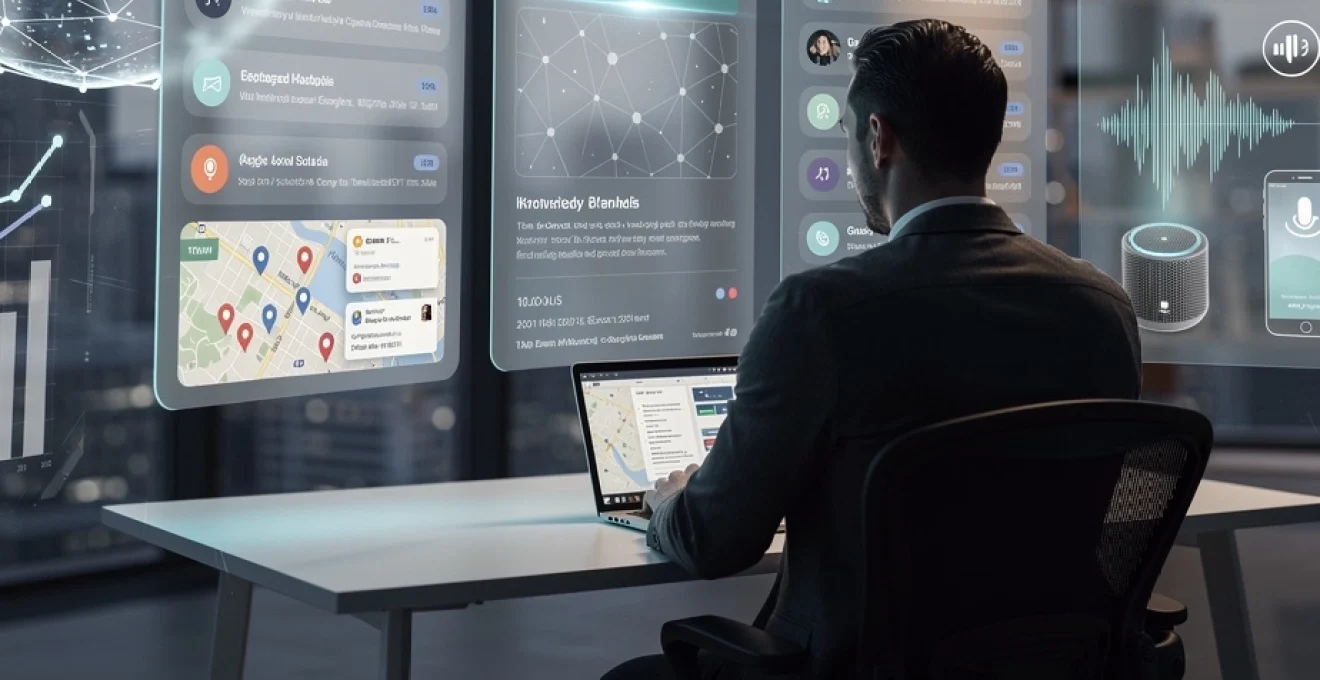
The digital marketing landscape has undergone a seismic shift that’s fundamentally altering how businesses approach online visibility. Search engines have evolved from simple directories of links into comprehensive answer engines that satisfy user queries directly on the search results page. This transformation, driven by artificial intelligence and enhanced SERP features, has created what industry experts term the “zero-click era” – a paradigm where users find answers without ever leaving Google’s ecosystem.
Recent data reveals that approximately 60-63% of Google searches now conclude without generating a single click to an external website. This isn’t merely a temporary disruption; it represents a permanent evolution in search behaviour that demands immediate strategic adaptation. Businesses that continue operating under traditional SEO assumptions risk becoming invisible in an increasingly competitive digital marketplace where visibility no longer guarantees traffic, but influence and authority matter more than ever.
Understanding Zero-Click search behaviour and SERP feature dominance
Zero-click search behaviour represents a fundamental shift in how users interact with search engines, transforming the traditional model of discovery and engagement. Modern search results pages have evolved into comprehensive information hubs that aggregate, synthesise, and present answers instantaneously, eliminating the need for users to navigate to external websites. This evolution reflects changing user expectations for immediate gratification and seamless information consumption.
The dominance of SERP features has created a new competitive landscape where businesses must compete not only against other websites but against Google’s own information systems. These features include AI Overviews, knowledge panels, featured snippets, and local packs, each designed to provide complete answers within the search interface. The result is a search ecosystem where traditional organic listings often appear below the fold, receiving significantly reduced visibility and engagement.
Featured snippets and knowledge panels impact on organic CTR
Featured snippets, often called “position zero,” have become the most coveted real estate in search results, appearing above traditional organic listings and providing direct answers to user queries. These snippets extract and display relevant information from web pages, presenting it in a formatted box that often satisfies user intent without requiring a click. Research indicates that featured snippets can capture up to 35% of all clicks for a given query, dramatically reducing traffic to websites ranking in positions one through three.
Knowledge panels present even greater challenges for organic click-through rates, as they provide comprehensive information about entities, businesses, and topics directly within the search interface. These panels aggregate data from multiple sources, including Wikipedia, Google My Business, and structured data markup, creating a self-contained information experience. For branded searches, knowledge panels can reduce organic CTR by 15-25%, as users obtain essential information such as contact details, hours of operation, and basic company information without visiting the actual website.
Google’s answer box algorithm and content extraction mechanisms
Google’s answer box algorithm employs sophisticated natural language processing and machine learning techniques to identify, extract, and present the most relevant information for specific queries. The algorithm prioritises content that demonstrates clear expertise, authority, and trustworthiness while providing concise, well-structured answers to user questions. This system favours content that uses semantic markup, clear headings, and structured formats such as lists, tables, and step-by-step instructions.
The content extraction mechanism analyses multiple ranking factors beyond traditional SEO signals, including content freshness, source credibility, and alignment with user intent. Semantic search capabilities enable the algorithm to understand context and relationships between concepts, allowing it to extract relevant information even when the exact query terms don’t appear in the source content. This sophisticated extraction process means that businesses must optimise not just for keywords, but for comprehensive topic coverage and semantic relevance.
Local pack results and google my business Zero-Click interactions
Local pack results represent one of the most significant zero-click opportunities for location-based businesses, as they provide essential information such as addresses, phone numbers, hours, reviews, and directions directly within the search results. These results often include interactive elements like click-to-call buttons, driving directions, and review snippets that enable users to complete their intended actions without visiting business websites. Studies show that local pack results generate approximately 44% of local search clicks, with many interactions occurring entirely within Google’s interface.
Google My Business profiles have become crucial digital storefronts that influence local search visibility and user decision-making. Enhanced features such as
Google Posts, messaging, product listings, and booking integrations have effectively turned these profiles into mini-websites that operate entirely within Google’s ecosystem. As a result, many high-intent actions—such as phone calls, table reservations, appointment bookings, and direction requests—are now completed without a single visit to the brand’s domain. For marketers, this requires a shift in thinking: Google My Business is no longer just a citation source for local SEO; it is a core conversion asset that must be actively managed, monitored, and optimised for zero-click interactions.
Voice search integration with google assistant and alexa responses
Voice search has accelerated the zero-click trend by removing the visual SERP altogether and replacing it with a single spoken answer. When users ask Google Assistant or Alexa for information, they rarely see a list of results; instead, they hear one preferred response, often sourced from featured snippets, structured data, or trusted knowledge bases. This winner-takes-most model compresses competition and makes capturing that primary answer position critical for brands seeking voice visibility.
From a technical perspective, voice assistants rely heavily on natural language understanding and entity recognition to map conversational queries to structured knowledge. Queries like “What time does the pharmacy near me close?” or “Who offers the best digital marketing services in my area?” are interpreted using contextual signals such as location, search history, and device type. Brands that optimise for conversational long-tail queries, maintain accurate local data, and build strong entity associations in Google’s Knowledge Graph are more likely to be selected as the spoken answer, even when no click occurs.
Technical SEO strategies for Zero-Click search optimisation
Winning in a zero-click environment requires more than traditional on-page tweaks; it demands a technical SEO strategy engineered for machine readability and SERP feature eligibility. Search engines increasingly act as intermediaries that interpret, summarise, and redistribute your content, so your technical foundation must support this interpretive layer. Structured data, clean information architecture, and entity-focused optimisation are now as important as title tags and meta descriptions for digital visibility.
Instead of thinking solely in terms of ranking “pages,” we must design digital assets that can be disassembled and reused as granular answer fragments. This means aligning your technical SEO with how Google’s algorithms crawl, index, and extract content for featured snippets, AI summaries, and knowledge panels. When implemented correctly, these strategies improve your chances of occupying multiple SERP surfaces simultaneously, increasing your share of voice even when clicks decline.
Schema markup implementation for enhanced SERP visibility
Schema markup acts as a translation layer between your website and search engines, turning human-readable content into structured data that algorithms can interpret reliably. By marking up elements such as products, reviews, FAQs, and organisation details with schema.org vocabulary, you help Google understand context, relationships, and intent signals more accurately. This semantic clarity is fundamental for earning rich results, including review stars, product carousels, and knowledge panel enhancements that drive zero-click visibility.
Implementing schema strategically means prioritising high-value templates and content types rather than attempting to mark up everything indiscriminately. Start with core business information (Organization, LocalBusiness), key revenue drivers (Product, Service, Review), and information assets likely to trigger AI summaries or featured snippets. Validate your markup using Google’s Rich Results Test and monitor Search Console for enhancement reports, treating structured data as an ongoing optimisation process rather than a one-off technical task.
FAQ schema and HowTo structured data deployment
FAQ and HowTo schema types are particularly powerful in a zero-click context because they are designed to surface direct answers, steps, and instructions in the SERP. When you mark up frequently asked questions with FAQPage schema, Google can display expandable Q&A elements beneath your result, effectively turning a single listing into a mini knowledge hub. Similarly, HowTo markup enables rich visual instructions, step breakdowns, and even image previews that guide users without leaving the results page.
The key to effective deployment is intentional content design. Rather than retrofitting schema onto loosely structured copy, create dedicated FAQ sections and procedural guides with clear questions, succinct answers, and step-by-step formatting. Think of each question-answer pair or instruction step as a self-contained block that could stand alone in an AI Overview or voice response. This structured clarity improves your chance of selection for zero-click features while still supporting deeper engagement for users who choose to click through.
Entity-based SEO and knowledge graph optimisation techniques
As Google leans further into semantic understanding, entity-based SEO has become central to zero-click optimisation. Instead of focusing solely on keywords, we need to position our brands, products, and experts as recognised entities within the Knowledge Graph. This involves strengthening the signals that associate your organisation with specific topics, locations, and attributes across the broader web, not just on your own site.
Practical techniques include maintaining consistent NAP (Name, Address, Phone) data across directories, securing and optimising a Wikipedia or Wikidata entry where appropriate, and using Organization, Person, and SameAs schema to link your site to verified social profiles and authoritative references. Publishing bylined expert content, earning citations from reputable industry publications, and appearing in relevant databases all contribute to your entity authority. Over time, these signals help Google understand who you are, what you do, and why you are a credible source—critical factors when its systems decide which brand to foreground in knowledge panels and AI-generated summaries.
Featured snippet targeting through content architecture
Targeting featured snippets effectively starts at the level of content architecture, not just wording individual paragraphs. Search engines look for sections that answer a specific question clearly and concisely, usually within 40–60 words, or through a clean list or table. By structuring your pages into logically segmented topics, each introduced with an explicit question-style heading, you create natural candidates for snippet extraction.
A useful analogy is to think of your page as a reference manual where each subsection could be photocopied and handed to someone as a standalone explanation. Use descriptive <h2> and <h3> headings that mirror long-tail queries (for example, “How does zero-click search affect ecommerce revenue?”) followed immediately by a direct, high-level answer. You can then elaborate with deeper detail, examples, and visuals. This top-down approach makes it easier for Google’s algorithms to understand which part of your content best satisfies a given question, increasing your probability of occupying position zero.
Brand authority building in Zero-Click search environments
In a world where many interactions never reach your website, brand authority becomes the real currency of digital visibility. If Google, Bing, or an AI assistant repeatedly surfaces your name, content, or expertise in zero-click results, you are effectively occupying mental real estate, even without direct traffic. This kind of repeated exposure shapes perception, builds familiarity, and influences future purchasing behaviour when users eventually move from research to action.
Authority in zero-click environments is built across multiple touchpoints: consistent entity signals, expert-driven content, strong review profiles, and active participation in the ecosystems that feed AI models, such as YouTube, Reddit, and trusted industry publications. You are not just optimising a website; you are curating a distributed presence that algorithms recognise as reliable. Over time, this authority helps you win not only more SERP features, but also more branded searches, direct visits, and referrals—metrics that matter when raw organic clicks from informational queries are in decline.
Content marketing adaptation for Zero-Click search dominance
Zero-click search does not diminish the value of content marketing; it reshapes its objectives and formats. Rather than creating endless top-of-funnel articles that compete for basic definitions already handled by AI, successful brands focus on content that either feeds answer engines or addresses deeper needs that still require a click. This means investing in clarity for high-level questions, while reserving your most detailed insights, frameworks, and tools for mid- and bottom-funnel content that drives meaningful engagement.
To thrive, your content strategy must embrace both breadth and depth. At the surface level, you craft concise, highly structured explanations that answer common questions succinctly enough to be quoted in snippets and summaries. Beneath that, you develop comprehensive guides, case studies, and interactive assets that satisfy complex intent and nurture decision-stage users. The goal is to dominate the conversation at every stage, whether the user remains on the SERP or chooses to explore further on your site.
Long-tail keyword strategy for conversational search queries
Conversational, long-tail queries are the backbone of zero-click and voice search, reflecting how people naturally ask questions. Instead of targeting head terms like “SEO” or “email marketing,” you gain greater visibility and relevance by focusing on phrases such as “how do zero-click searches affect SEO strategy” or “best email marketing strategy for B2B startups.” These longer, more specific queries reveal clearer intent and often trigger SERP features like People Also Ask boxes, featured snippets, and AI-generated summaries.
Building a long-tail keyword strategy involves mapping real questions that your audience asks throughout their journey, from problem awareness to vendor comparison. Use tools, customer interviews, and search console data to identify patterns in how users phrase their challenges and goals. Then, weave those phrases into headings, FAQs, and explanatory sections, writing in a natural, conversational tone. When you align your language with the way people actually speak and search, you increase your chances of being selected as the answer in both text-based and voice-driven zero-click experiences.
Content depth and topical authority development
Search engines and AI models increasingly favour sources that exhibit deep topical authority rather than shallow coverage of many disconnected themes. In practice, this means building content clusters around core topics, where a central pillar page is supported by interlinked articles that address related subtopics and questions. For example, instead of a single page about zero-click search, you might develop a full hub covering user behaviour, technical optimisation, analytics impact, and strategic responses.
This cluster-based approach not only improves internal navigation for users but also clarifies to algorithms that your site is a comprehensive resource on specific subjects. Think of it as creating a detailed map rather than isolated landmarks: the more complete and coherent the map, the more confidently AI systems can rely on your content when constructing summaries or resolving queries. Over time, strong topical authority increases your likelihood of appearing multiple times within the same SERP—across AI Overviews, People Also Ask answers, and organic listings—compounding your share of digital visibility.
Multi-format content creation for SERP feature targeting
Different SERP features favour different content formats, so relying solely on traditional blog posts limits your reach in a zero-click landscape. Video content is frequently surfaced in carousels and key moments for how-to queries, while images, charts, and tables are often pulled into visual answers and AI-generated overviews. Likewise, podcast transcripts, slide decks, and tools can appear in discovery modules or be referenced by answer engines as supporting resources.
To maximise SERP coverage, consider each core topic as a multi-format opportunity. A single in-depth guide on “how zero-click searches are changing digital visibility” can be repurposed into a short explainer video, an infographic summarising key stats, a downloadable checklist, and a series of FAQ entries. This not only caters to varied user preferences but also increases the number of content assets that search engines can surface across different features. In effect, you turn one idea into a portfolio of touchpoints that collectively strengthen your presence in a crowded, zero-click SERP.
Revenue impact analysis and business model adaptations
The rise of zero-click searches has direct implications for revenue, especially for businesses that historically relied on high volumes of informational organic traffic. When a significant portion of top-of-funnel queries no longer drive visits, metrics such as sessions, pageviews, and email sign-ups may stagnate or decline, even if brand exposure is increasing. This disconnect can be unsettling if your reporting and attribution models still equate SEO success with raw traffic growth.
To understand the true revenue impact, you need to look beyond surface-level volume and analyse changes in conversion quality and user journeys. Many organisations are discovering that while overall organic sessions may drop, the users who do click through from search are further along the decision path and convert at higher rates. In other words, zero-click search filters out low-intent visitors and compresses the funnel, shifting value from quantity to quality. Recognising this shift is the first step in adapting business models and KPIs.
From a strategic standpoint, revenue resilience in a zero-click world depends on diversifying acquisition channels and redefining what you consider a successful search interaction. Phone calls from local packs, direction requests, direct brand searches, and assisted conversions from users who first encountered you in an AI summary all contribute to ROI, even if your analytics platform cannot always attribute them neatly. Brands that broaden their perspective to include these indirect and cross-channel effects are better positioned to make informed investment decisions and avoid underestimating the impact of search visibility.
Business model adaptations may involve repositioning SEO as an “influence and demand” function rather than a pure traffic engine. This could mean aligning SEO KPIs with brand lift studies, lead quality metrics, and lifetime value rather than with click-through rates alone. It may also prompt experimentation with new monetisation approaches, such as premium tools, gated calculators, or subscription-based content, which are designed to capture value from the smaller pool of highly engaged visitors who progress beyond the SERP. By recalibrating expectations and monetisation strategies, you can turn the zero-click challenge into a more efficient, intent-driven growth model.
Future-proofing digital marketing strategies against Zero-Click trends
Zero-click search is not a short-term anomaly but a structural shift driven by AI, changing user behaviour, and platform incentives. Future-proofing your digital marketing strategy means accepting that many early-stage interactions will take place on third-party interfaces you do not control. Instead of resisting this reality, ask how you can collaborate with these ecosystems—feeding them accurate, well-structured information while building owned assets that remain attractive destinations for deeper engagement.
Practically, this involves three parallel priorities. First, continue to refine your technical and content strategies for answer engine optimisation, ensuring your brand is present wherever AI systems look for trustworthy information. Second, invest in owned channels—email, communities, apps, and membership areas—that strengthen relationships once users choose to move beyond the SERP. Third, evolve your measurement frameworks to encompass impression share, entity visibility, and cross-channel influence, not just last-click attribution. By doing so, you create a more resilient, holistic view of performance that aligns with how discovery and decision-making actually happen today.
Looking ahead, we can expect search experiences to become even more personalised, conversational, and multimodal, blending text, voice, and visual elements into unified interfaces. Brands that experiment early with these formats, test their content in AI-driven environments, and treat visibility as an ongoing optimisation challenge will be better equipped to adapt. Ultimately, succeeding in a zero-click landscape is less about chasing algorithms and more about consistently being the most helpful, credible answer—wherever and however your audience chooses to search.