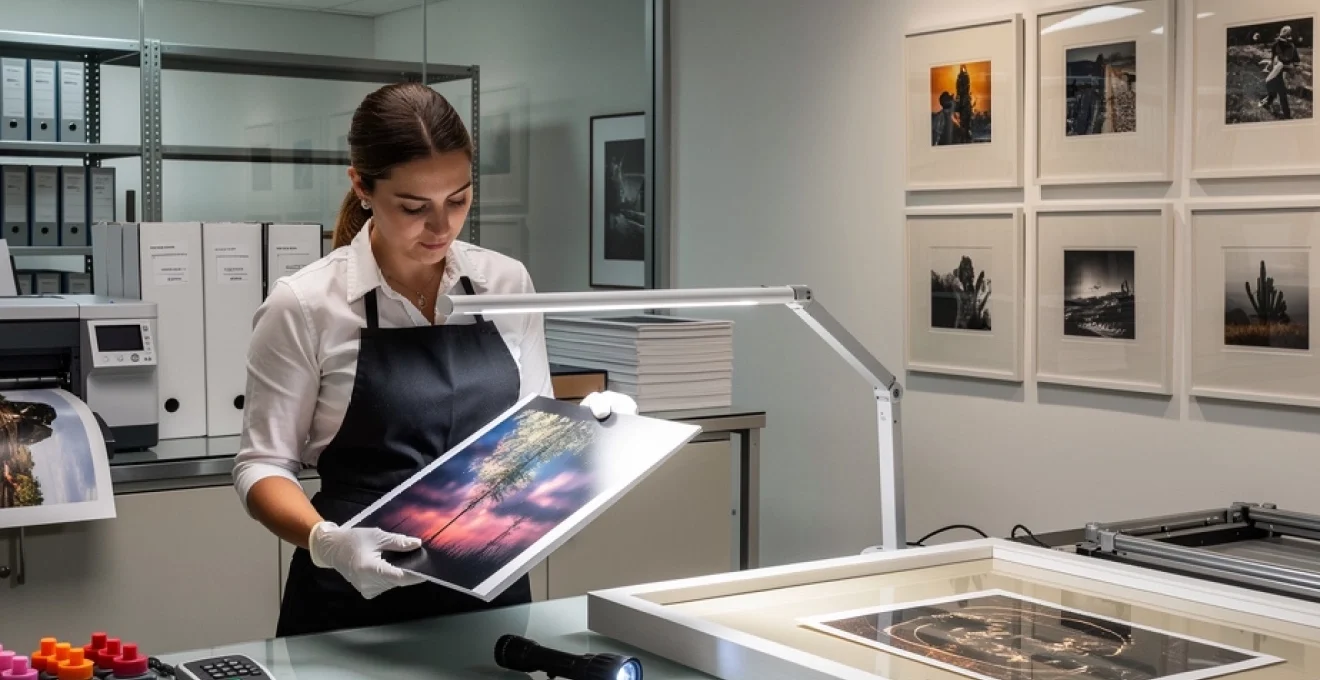
The longevity of fine art and photographic prints has become a critical concern for collectors, photographers, and institutions alike. Whether you’ve invested in limited edition artworks or produced your own prints, understanding the factors that influence durability can mean the difference between a treasured piece that lasts generations and one that fades into obscurity within years. The science behind print permanence has evolved dramatically, with materials and methods now available that can extend the life of prints far beyond what was possible just two decades ago.
Print degradation doesn’t happen overnight. It’s a gradual process influenced by ink chemistry, substrate composition, environmental conditions, and protective measures. The good news is that with proper material selection and preservation techniques, you can significantly enhance the archival quality of your prints. This comprehensive guide explores the technical aspects of print longevity, from the molecular structure of pigments to the atmospheric conditions that accelerate deterioration.
Archival pigment inks versus Dye-Based formulations for longevity
The choice between pigment and dye-based inks represents perhaps the most fundamental decision affecting print longevity. These two ink technologies differ substantially in their chemical composition and physical properties. Dye-based inks consist of colorants dissolved at the molecular level in a liquid carrier, creating transparent, vibrant colours that penetrate paper fibres. Pigment inks, conversely, contain microscopic solid particles suspended in the carrier fluid, resting primarily on the paper surface rather than being absorbed into it.
The molecular structure of dyes makes them inherently vulnerable to photochemical degradation. When exposed to light, particularly ultraviolet radiation, the chromophore structures within dye molecules break down, causing visible fading. This process accelerates dramatically in the presence of atmospheric oxidants like ozone. Pigment particles, being significantly larger and chemically more stable, resist this degradation far more effectively. While dyes might produce slightly more saturated colours initially, pigments offer substantially superior lightfastness, often lasting ten to twenty times longer under identical display conditions.
Water resistance presents another critical distinction. Dye-based prints remain vulnerable to moisture damage throughout their existence, with even ambient humidity potentially causing colour migration or bleeding. Pigment prints, once dried, demonstrate remarkable water resistance, maintaining their appearance even when exposed to moisture. This characteristic proves particularly valuable for prints displayed in humid environments or handled frequently. The protective qualities extend to resistance against atmospheric pollutants, with pigment particles acting as a physical barrier that shields underlying paper fibres from chemical attack.
Epson UltraChrome and canon LUCIA PRO pigment technologies
Professional-grade pigment ink systems have reached remarkable sophistication. Epson’s UltraChrome HD and K3 ink sets utilize multi-density pigment formulations with particle sizes optimized for different colour channels. The technology incorporates ten to twelve individual ink colours, including multiple densities of grey to eliminate bronzing and expand the tonal range in monochromatic prints. These systems achieve a gamut approaching that of traditional dye inks whilst maintaining the stability advantages of pigments.
Canon’s LUCIA PRO pigment system takes a different approach, emphasizing particle uniformity and coating technology. The formulation includes a chroma optimizer that creates an even surface receptivity across printed areas, eliminating the differential gloss that can plague pigment prints. This innovation addresses one of the historical weaknesses of pigment technology—the tendency for heavily pigmented areas to exhibit a different sheen than lighter regions. Recent independent testing suggests properly matched combinations of these professional ink systems with appropriate papers can achieve display permanence exceeding 200 years under museum lighting conditions.
Lightfastness ratings and ISO 18909 permanence standards
The ISO 18909 standard provides the framework for evaluating and reporting print permanence. This international specification defines testing protocols for assessing colour stability under controlled light exposure, measuring both the rate of colour change and the formation of yellowing in highlight areas. Prints are subjected to accelerated ageing using calibrated light sources that simulate years of display exposure in compressed timeframes. The standard requires testing at specific illuminance levels and establishes thresholds for acceptable colour deviation.
Lightfastness ratings typically use the Blue Wool Scale, a standardized system where ratings from 1 to 8
are used to describe permanence, with higher numbers indicating greater resistance to fading. In practice, manufacturers will often translate these results into estimated display life under specified conditions, such as “up to 60 years behind glass at 450 lux, 12 hours per day.” When comparing lightfastness ratings, it is essential that you look for tests conducted according to ISO 18909, as this ensures that the results are directly comparable across different printers, inks, and papers. Cheaper consumer printers often omit this level of disclosure, which can be a red flag if you intend your prints to serve as long-term archival objects rather than short-lived décor.
Fade resistance testing under wilhelm imaging research protocols
While ISO standards define the methodology, many practitioners look specifically to Wilhelm Imaging Research (WIR) for independent permanence testing. WIR protocols subject prints to accelerated light exposure, high humidity, and elevated ozone levels in meticulously controlled environments. By correlating these conditions with typical museum and home display scenarios, they extrapolate an estimated “years to noticeable fade” for different ink and paper combinations. For anyone serious about making prints last, these numbers offer a much clearer guide than marketing claims alone.
Why does this matter to you in practical terms? Because two pigment inksets that appear similar on paper can perform very differently once exposed to light and pollutants. A combination rated at 200+ years under WIR’s museum display conditions might drop to under 40 years if you switch to a bright, optical-brightener-heavy paper or display in high ambient light. When selecting a printer and media, it is wise to consult WIR data (or similarly rigorous test reports) and prioritize combinations with proven fade resistance for the way your work will actually be used—whether that is gallery display, portfolio storage, or sale to collectors.
Metamerism and colour shift prevention in pigment prints
Metamerism—where colours match under one light source but shift under another—has long been a concern with pigment-based prints. Early pigment systems could appear neutral under daylight yet exhibit a green or magenta cast under tungsten or LED lighting. Modern pigment technologies from Epson, Canon, and others have largely mitigated this through more balanced multi-grey inksets and sophisticated screening algorithms. Nonetheless, if you are producing black-and-white photographs or colour-critical fine art prints, you should still be alert to metameric failure.
To minimise metamerism and long-term colour shift, start by profiling each unique printer–ink–paper combination with a high-quality ICC profile, rather than relying solely on generic manufacturer presets. Soft-proofing in a calibrated environment allows you to catch potential casts before committing to large editions. Over time, subtle chemical changes in papers (especially those with optical brightening agents) can also alter how pigments reflect light, leading to unexpected shifts. For truly archival pigment prints, pairing a stable pigment inkset with a well-engineered, OBA-free fine art paper and maintaining consistent viewing conditions is the closest analogue to building on bedrock instead of shifting sand.
Fine art paper selection and substrate chemistry impact
If inks are the “paint,” the paper is the canvas—and its chemistry has just as much influence on long-term durability. Substrate composition determines how inks sit, absorb, and age, as well as how the sheet responds to light, heat, and humidity. Many visually impressive papers on the consumer market are optimized for initial brightness and punchy colour rather than archival stability. For prints intended to last decades, the goal is to balance surface aesthetics with a chemically inert, stable base that will not become brittle, yellow, or acidic over time.
At a microscopic level, paper fibres, fillers, sizings, and coatings all interact with the inks. A well-designed archival paper will support the pigment particles near the surface, maintain structural integrity, and resist chemical reactions with atmospheric pollutants. Conversely, a lignin-rich, unbuffered paper may look fine today but can darken and lose strength in a matter of years, even if the ink itself is highly permanent. Understanding the differences between cotton rag and alpha cellulose, and between archival and decorative papers, is essential if you want your fine art prints to outlast trends in display technology.
Cotton rag versus alpha cellulose fibre composition
Archival fine art papers are typically based on either 100% cotton rag or purified alpha cellulose (wood pulp that has been extensively processed). Cotton rag fibres are naturally long, strong, and free from lignin, which gives them excellent longevity and dimensional stability. Centuries-old etchings and watercolours on rag papers demonstrate how well this material can age under proper storage. Alpha cellulose papers, when manufactured to archival standards, can approach this performance at a lower cost, making them attractive for larger editions or proofing where absolute museum-grade longevity is not required.
So which should you choose for long-lasting prints? For your most important work—museum acquisitions, collector editions, or pieces you intend as heirlooms—100% cotton rag remains the gold standard. It offers unmatched resistance to embrittlement and can better withstand potential fluctuations in humidity. High-quality alpha cellulose papers, however, can still be an excellent choice if they are acid-free, lignin-free, and buffered. They are particularly useful when you need a specific surface character—such as a baryta gloss—without the higher cost of cotton-based baryta alternatives.
Acid-free and lignin-free paper requirements for archival quality
Acidity is the quiet enemy of paper. As lignin and certain sizing agents break down, they generate acids that attack cellulose chains, causing yellowing and loss of strength. For archival prints, you want a paper base that is both acid-free (pH-neutral or slightly alkaline) and lignin-free. This combination significantly slows the internal chemical reactions that cause deterioration. Many fine art inkjet papers will state “archival,” but it is worth looking for more specific language such as “acid-free, lignin-free, buffered with calcium carbonate” and, where available, compliance with ISO 9706 or ISO 11108.
Using acid-free, lignin-free substrates is especially important when your prints will be framed or stored in close contact with other materials. Even if you frame with museum-grade mats and backings, an acidic print base can still self-destruct from within. Think of it like using high-quality fuel in a performance engine: archival inks reach their full longevity only when the underlying paper is chemically stable. If you are unsure about a paper’s true archival status, consult technical datasheets or independent conservation resources rather than relying solely on marketing terms like “premium” or “professional.”
Hahnemühle photo rag and canson baryta surface coatings
Leading fine art papers such as Hahnemühle Photo Rag and Canson Infinity Baryta Photographique illustrate how surface coatings influence both appearance and durability. Hahnemühle Photo Rag, a 100% cotton rag paper with a matte inkjet receptive coating, offers a smooth surface and deep, velvety blacks, particularly attractive for fine art photography and illustration. The coating is engineered to hold pigment particles near the surface while limiting bronzing and gloss differential, which helps maintain consistent tonality over time.
Canson Baryta-style papers, by contrast, emulate the look of traditional fibre-based darkroom papers, with a subtle gloss and a baryta (barium sulphate) layer that enhances micro-contrast and Dmax. Their inkjet coatings are optimized for pigment inks, providing fast drying, high colour gamut, and good resistance to bronzing and gloss differential. When paired with Epson UltraChrome or Canon LUCIA PRO inks, these papers have demonstrated impressive permanence in independent tests. For you as a printmaker, the choice between a cotton rag matte surface and a baryta gloss comes down to the visual language you prefer and how the print will be displayed under different lighting.
Optical brightening agents and their degradation over decades
Optical brightening agents (OBAs) are fluorescent compounds added to many papers to increase apparent whiteness. They absorb ultraviolet light and re-emit it in the blue spectrum, making the sheet look brighter and cooler. In the short term, this can make colours appear more vivid and blacks deeper—an appealing effect for commercial prints and certain photographic styles. However, OBAs are not inherently stable. Over time, they can burn out or migrate, leading to a gradual warm shift in paper tone, sometimes accompanied by uneven blotching.
From an archival perspective, heavy use of OBAs introduces a variable that you cannot fully control: the print’s appearance may change as the optical brighteners decay, even if the inks themselves remain stable. If you are aiming for long-term colour consistency, consider OBA-free or “low OBA” papers where the base whiteness comes from the fibre and fillers rather than fluorescent additives. A helpful analogy is interior paint: a bright, optical-whitened wall may look spectacular under showroom lights, but a high-quality, pigment-based paint will keep its character better over years of real-world exposure.
Uv-filtering glazing and museum-grade framing materials
Once a print leaves the printer, framing becomes its primary line of defence against light, pollutants, and mechanical damage. Even the most archival ink and paper combination can fade or discolour rapidly if displayed unprotected in strong light or in direct contact with acidic materials. Museum-grade glazing, proper spacing, and conservation-quality mounts transform a vulnerable sheet of paper into a stable, self-contained micro-environment. If you have ever seen two prints from the same edition—one framed to archival standards, the other in a cheap clip frame—the stark difference after a decade of display makes the case more strongly than any lab report.
Effective conservation framing has three core goals: filter harmful UV radiation, maintain a small but crucial air gap between the print and glazing, and ensure every material in contact with the print is pH-neutral and chemically stable. Meeting these requirements does not necessarily mean using the most expensive components in every situation, but it does require making informed choices. Understanding the difference between standard glass and UV-filtering acrylic, as well as between decorative mats and true conservation boards, allows you to balance cost, weight, and protection in a deliberate way.
Truvue conservation clear and UV70 acrylic protection levels
In terms of glazing, not all “clear” materials are equal. Standard soda-lime glass blocks only a fraction of the most harmful ultraviolet wavelengths, leaving your prints vulnerable to cumulative light damage even when displayed indoors. Products such as Tru Vue Conservation Clear glass and UV70 acrylic significantly increase protection, blocking around 97–99% of UV radiation in the 300–380 nm range. This reduction in UV exposure can dramatically extend the effective display life of pigment and dye-based prints alike, especially in rooms with strong daylight or mixed artificial lighting.
When deciding between glass and acrylic, consider both protection and practicality. Acrylic options like UV70 and Optium Museum Acrylic are lighter and shatter-resistant, making them safer for large works or public spaces. They also offer excellent clarity, with premium variants including anti-reflective and anti-static coatings. Glass, while heavier and more fragile, typically resists scratching better and can be more economical for smaller pieces. In either case, pairing UV-filtering glazing with sensible display practices—avoiding direct sun, limiting overall lux levels—offers far more protection than relying on glazing alone.
Air gap spacing and condensation prevention behind glazing
Keeping the print surface from touching the glazing is more than an aesthetic choice; it is a preservation necessity. Direct contact increases the risk of condensation forming a bond between emulsion and glass, leading to sticking, cockling, or even image transfer. An air gap, created by a window mat or invisible spacers, allows the microclimate inside the frame to buffer short-term swings in humidity and prevents the print from abrading against the glazing during handling or transit.
How much spacing is enough? For most fine art and photographic prints, a few millimetres provided by a standard 4-ply or 8-ply mat is adequate, especially if the frame is sealed at the back to reduce moisture ingress. In high-humidity environments or for very large works, deeper spacers may be advisable to prevent the print from bowing forward. Think of the air gap as a shock absorber: it doesn’t eliminate environmental stress, but it softens its impact, helping your carefully produced prints maintain their surface integrity over time.
Acid-free mat board and archival mounting adhesives
The materials that hold a print in place are often overlooked, yet they can be just as damaging as poor-quality paper. Conservation-grade mat boards are made from buffered cotton rag or alpha cellulose and are free from lignin and optical brighteners, providing a neutral environment immediately surrounding the print. Using a simple decorative mat cut from acidic board may save money in the short term, but over years it can introduce staining, embrittlement, and “mat burn” where the bevel contacts the print border.
Equally important is the mounting method. For true archival framing, you want attachments that are both reversible and non-staining. Japanese paper hinges applied with refined wheat starch paste, archival mounting corners, or conservation-grade gummed tapes are preferred. Pressure-sensitive office tapes, spray adhesives, and permanent mounting tissues can off-gas harmful chemicals and are notoriously difficult to remove without damage. A useful rule of thumb is this: if a conservator could not safely undo your mounting choices in the future, they are probably not appropriate for prints you care about.
Environmental control parameters for print preservation
Even the best materials and framing cannot fully compensate for an aggressive environment. Temperature, relative humidity, light levels, and airborne pollutants all act, often invisibly, on the physical and chemical structure of prints. While professional archives invest in sophisticated climate control systems, you can still apply the same principles at home or in a studio with a few deliberate habits. The key is to aim for moderation and stability rather than chasing a single “perfect” number on a dial.
Many of the deterioration mechanisms affecting paper and ink—hydrolysis, oxidation, and mechanical stress from expansion and contraction—accelerate when temperature and humidity swing widely. By keeping these parameters within recommended ranges, you effectively slow the clock on your prints, buying them years or even decades of additional life. Combined with light management and filtration of pollutants, good environmental control is one of the most cost-effective ways to protect your investment in fine art and photographic prints.
ISO 18920 temperature and relative humidity specifications
ISO 18920 and related standards provide guidance on environmental conditions suitable for storing processed imaging materials. For most paper-based prints, a temperature between 18–22°C (64–72°F) and a relative humidity (RH) of 30–50% is considered an acceptable compromise between human comfort and preservation. Crucially, rapid fluctuations—such as daily swings from 30% to 70% RH—are more damaging than a stable, slightly non-ideal level. Repeated expansion and contraction can lead to cockling, cracking of coatings, and weakening of fibre bonds.
In practice, you may not be able to maintain archival storage conditions throughout your home, but you can choose the most stable rooms for displaying important works. Avoid basements, attics, and exterior walls prone to condensation. If you live in a region with high seasonal humidity, a dehumidifier and a simple digital thermo-hygrometer can make a tangible difference. For truly irreplaceable prints, cool or cold storage—similar to what archives use for film and slides—provides the best long-term protection, though it requires careful packaging and acclimatization procedures to avoid condensation when bringing items in and out.
Lux level management and visible light exposure limits
Light, even in the visible spectrum, is both friend and foe. It allows us to enjoy prints on the wall, but it also drives the photochemical reactions that fade inks and yellow papers. Lux level—essentially the brightness falling on the print surface—is a more useful metric than watts or lumens when thinking about damage. Museums typically limit light-sensitive works on paper to 50 lux for very delicate items and 150–200 lux for more robust materials, combined with strict limits on total exposure time.
How can you apply this without turning your living room into a cave? Start by avoiding direct sunlight entirely; even brief exposure each day adds up to an enormous cumulative dose. Use blinds, curtains, or UV-filtering films on windows when necessary. For artificial lighting, LED fixtures with low UV output are preferable to halogen or older fluorescents. Dimmers and directional spotlights allow you to enjoy your prints at comfortable viewing levels while still reducing overall exposure. If you have a rotation of framed works, consider periodically resting sensitive prints in dark storage to limit their lifetime light dose.
Atmospheric pollutants and ozone degradation mitigation
Ozone, nitrogen oxides, sulfur dioxide, and volatile organic compounds (VOCs) all contribute to the chemical degradation of prints. Pigment-based inks are more resistant than dyes, but they are not immune, and paper supports remain vulnerable. Ozone, in particular, has been implicated in accelerated fading of certain colourants and in the formation of yellowish surface staining. Urban environments and rooms with frequent use of cleaning sprays, paints, or new furnishings can have surprisingly high levels of reactive gases.
To mitigate these risks, focus on both reduction at the source and localized filtration. Avoid hanging valuable prints near exterior doors, fireplaces, or kitchens where pollutants and soot are more concentrated. Air purifiers equipped with activated carbon filters can help absorb ozone and VOCs in display or storage rooms. Within frames, using sealed backing and, where appropriate, interleaving prints in archival polyester or paper enclosures adds another protective barrier. As with humidity and light, you may not eliminate pollutants entirely, but every step that slows their access to your prints contributes meaningfully to long-term durability.
Protective coating technologies and lamination methods
Beyond framing, surface coatings and laminates offer another layer of defence for prints, particularly those that will be handled frequently or displayed without glazing. Varnishes, sprays, and film laminations can improve resistance to abrasion, fingerprints, and moisture while sometimes enhancing colour saturation and perceived depth. However, not all coatings are equal from an archival standpoint. Some can yellow, crack, or become tacky over time, and poorly matched products may interact negatively with specific ink and paper combinations.
For inkjet fine art prints, water-based acrylic varnishes and dedicated print coatings are generally preferable to hardware-store sprays or generic clear coats. Products designed for pigment prints often include UV inhibitors and flexible binders that move with the paper during humidity changes, reducing the risk of crazing. When applying any protective coating, always test on a non-critical print first, as surface sheen, colour balance, and texture can shift. Film lamination—either hot or cold—provides robust physical protection and is common in signage and display graphics, but it is usually considered less reversible and may trap any existing micro-defects or dust permanently.
Digital asset redundancy and reprint capability workflows
No matter how well you protect physical prints, true long-term security comes from maintaining high-quality digital masters and a workflow that allows faithful reprinting if needed. In that sense, digital redundancy functions like an insurance policy for your artwork. Archival pigment prints may last for generations, but if a piece is lost, damaged, or eventually fades, having a well-managed digital file means you—or future custodians—can recreate it to an exacting standard. The durability of your prints, therefore, is tied not only to paper and ink but also to your digital preservation practices.
An effective redundancy strategy starts with storing master files (ideally in non-destructive formats such as 16-bit TIFF or high-bit RAW) in at least two physically separate locations. This might mean a local RAID or NAS system paired with an offsite or cloud backup. Version control and clear naming conventions ensure that you know which file corresponds to which edition and print size. Embedding or maintaining detailed metadata—printer model, inkset, paper type, ICC profile, and any custom settings—allows you to reconstruct the original print conditions even if your hardware changes over time.
Additionally, consider creating a “print recipe” document or database entry for each significant work. This can include soft-proof screenshots, notes on ambient light conditions used for evaluation, and any post-print treatments such as varnishing. When technology inevitably evolves, these records help you translate your intent to new printers and media with minimal drift. Finally, for collectors and institutions, offering or requesting both an archival print and a clearly documented digital master can bridge the gap between traditional print collecting and contemporary digital practice, ensuring that the image—if not the original sheet of paper—can endure far beyond the lifespan of current devices.