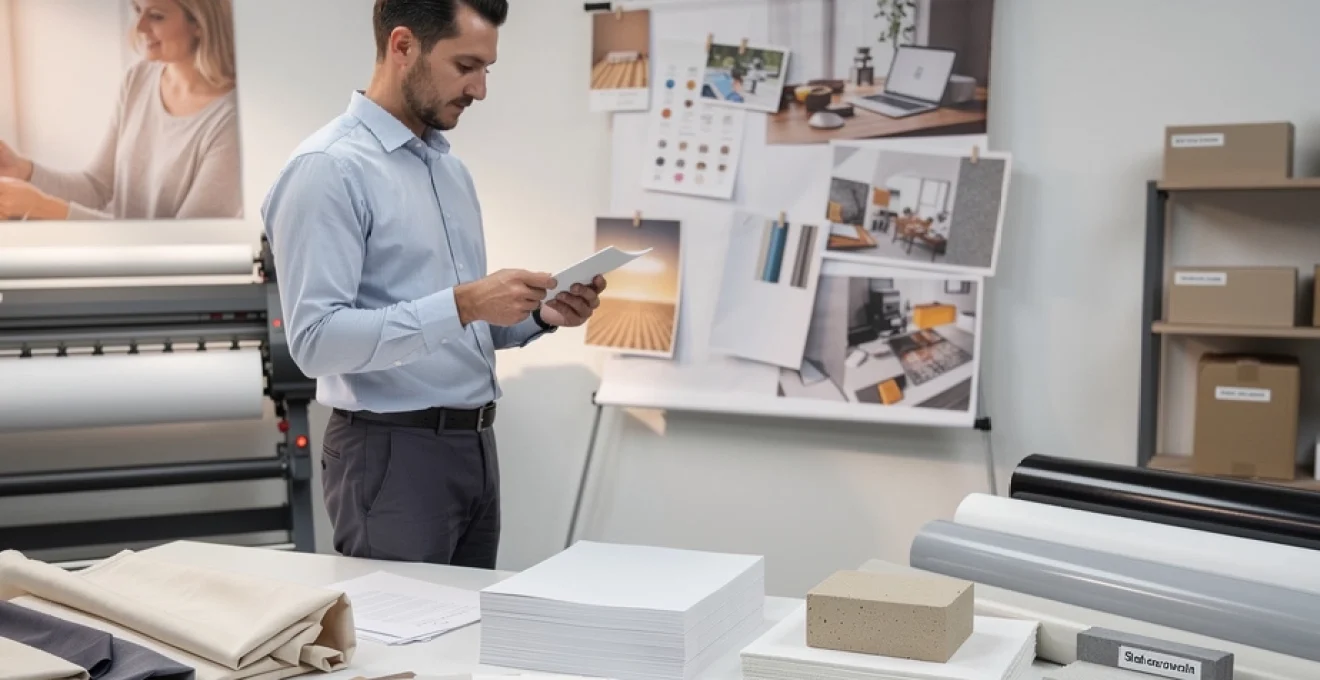
The success of any printing project hinges not only on exceptional design but equally on the selection of appropriate materials that bring that design to life. Whether you’re producing corporate brochures, outdoor banners, or premium business stationery, the substrate you choose directly influences the visual impact, durability, and perceived quality of the finished product. With hundreds of material specifications available—from varying paper weights and finishes to synthetic substrates and eco-friendly alternatives—making informed decisions requires a comprehensive understanding of the options at your disposal. The right material selection ensures your printed materials perform their intended function whilst reflecting the professionalism and values of your brand.
Material choices extend far beyond simple aesthetic considerations. Factors such as the environment where the print will be displayed, the expected lifespan, handling requirements, and even sustainability credentials all play crucial roles in determining the optimal substrate for your project. A business card printed on flimsy 200gsm stock conveys an entirely different message than one produced on substantial 400gsm board, just as an outdoor banner requires fundamentally different material properties than an indoor exhibition display. Understanding these nuances empowers you to specify materials that not only meet practical requirements but also enhance the overall effectiveness of your printed communications.
Understanding paper stock specifications: GSM, finish, and opacity ratings
Paper specifications might initially appear complex, but grasping the fundamentals enables you to communicate precisely with print professionals and select materials that perfectly suit your requirements. The three primary characteristics that define paper stock are weight (measured in grams per square metre or GSM), finish (the surface treatment applied), and opacity (the degree to which light passes through the material). Each of these attributes significantly impacts both the appearance and functionality of your printed materials, making it essential to understand how they interact and influence the final product.
When specifying paper stock for any project, you’ll encounter numerous technical terms that describe these characteristics with precision. Manufacturers produce paper in remarkably consistent specifications, allowing you to replicate results across multiple print runs and ensure brand consistency. The relationship between weight, finish, and opacity isn’t always straightforward—a heavier paper doesn’t automatically guarantee higher opacity, and certain finishes can dramatically alter how inks appear on the surface. By developing familiarity with these specifications, you can make informed decisions that balance aesthetic preferences with practical considerations such as postage costs, handling durability, and printing technique compatibility.
Coated vs. uncoated paper: gloss, silk, and matt surface treatments
The finish applied to paper stock fundamentally alters how it interacts with ink and how the final print appears to the viewer. Coated papers receive a surface treatment that creates a smoother, more uniform texture, whilst uncoated papers retain the natural fibrous surface of the paper itself. Gloss-coated papers offer the highest sheen, reflecting light dramatically and producing vibrant, saturated colours with exceptional contrast. This finish excels for photography-heavy materials such as product catalogues, fashion brochures, and promotional flyers where visual impact takes priority. The reflective quality of gloss coating can, however, create readability challenges under certain lighting conditions, particularly for text-heavy documents.
Silk-coated papers—sometimes marketed as satin or semi-gloss—provide a middle ground between the high shine of gloss and the subdued appearance of matt finishes. This versatile option delivers excellent colour reproduction with reduced glare, making it suitable for corporate brochures, magazines, and marketing materials that combine substantial text content with imagery. Matt-coated papers offer minimal reflection whilst still providing the smooth surface necessary for high-quality reproduction, creating an elegant, sophisticated appearance that works beautifully for prestige publications, art reproductions, and upmarket marketing collateral. Uncoated papers showcase a natural, tactile quality that conveys authenticity and environmental consciousness, though they typically absorb more ink and produce slightly less vibrant colours compared to their coated counterparts.
Paper weight measurement: GSM standards from 80gsm to 400gsm
GSM (grams per square metre) provides a standardised measurement of paper weight that allows consistent specification across different manufacturers and paper types. Understanding the practical implications of various GSM ratings helps you select appropriate weights for different applications. Standard office copier paper typically measures 80gsm, offering economy and flexibility but limited durability. For
everyday documents that do not need to make a strong visual impression. Stepping up to 100–130gsm provides a noticeable improvement in rigidity and opacity, making this range suitable for letterheads, internal newsletters, and basic leaflets. For brochures, quality flyers, and magazine pages, 150–170gsm is often considered the sweet spot, delivering a premium feel without excessive bulk or postage cost. Moving into 200–250gsm, stocks begin to behave more like light card, ideal for covers, menus, and high-end data sheets that require greater durability and a more substantial hand-feel.
Beyond 300gsm, materials are generally categorised as board rather than paper. Business cards, postcards, and invitation cards are commonly produced on 300–400gsm stock, providing the stiffness and resilience that customers associate with quality. Heavier boards above 400gsm are often created by laminating multiple sheets together (known as duplexing or triplexing) to achieve exceptional thickness and tactility. While heavier weights can certainly elevate perceived quality, they may also require specific finishing equipment, influence postage brackets, and limit compatibility with some digital presses, so it is always advisable to confirm suitability with your print provider before finalising specifications.
Opacity and show-through: selecting appropriate thickness for double-sided printing
Opacity refers to how much light passes through a sheet of paper, directly influencing how visible printing on the reverse side will be. Low-opacity papers allow significant show-through, which can make double-sided documents difficult to read and appear unprofessional. This is particularly important for text-heavy projects such as manuals, catalogues, and booklets where clarity and legibility are paramount. While higher GSM often correlates with improved opacity, the relationship is not absolute, as fibre composition, coating, and manufacturing process all play important roles.
When planning double-sided printing, it is wise to specify a paper with sufficient opacity to prevent distracting shadows and ghosting. For standard corporate documents, 100–120gsm usually offers an acceptable balance between thickness and show-through control. Premium brochures, reports, and high-end magazines may benefit from 130–170gsm stocks where images and dense colour coverage appear on both sides. If your design features strong solid colours or heavy black areas, discussing opacity requirements with your printer can help you avoid issues such as mottling, strike-through, or uneven ink absorption. Where extreme opacity is required—for example, luxury invitation cards printed both sides—board-level thickness or laminated constructions may be the most effective solution.
Specialty finishes: linen, laid, and textured paper stocks
Beyond standard coated and uncoated papers, specialty textured stocks introduce a tactile dimension that can significantly enhance your brand presentation. Linen papers feature a subtle woven pattern reminiscent of fine fabric, lending a refined, corporate character to business stationery, invitations, and presentation folders. Laid papers display a traditional ribbed texture created by the paper-making process, evoking heritage, authenticity, and craftsmanship—qualities that suit legal firms, professional services, and luxury brands seeking a classic aesthetic. These textures are often more apparent when viewed at an angle or under directional light, providing a discreet sense of sophistication rather than overt decoration.
Other textured stocks include hammered, felt-marked, and embossed surfaces that can mimic natural materials, handmade paper, or even leather-like finishes. These substrates work particularly well for premium invitations, certificates, boutique packaging, and limited-edition print runs where differentiation is key. It is worth noting that heavily textured papers can influence how ink lays on the surface, sometimes reducing sharpness for very small text or fine detail. For this reason, you may want to request printed samples or conduct a short test run to ensure your chosen combination of design and textured stock achieves the desired result. When used thoughtfully, textured papers transform print from a purely visual medium into a memorable tactile experience.
Material selection for large format and banner applications
Large format printing introduces a different set of material considerations compared to small format items such as brochures and business cards. When you are specifying banners, exhibition graphics, or building wraps, factors like viewing distance, installation method, wind load, and weather exposure become just as important as colour reproduction. Choosing the right substrate ensures your graphics remain vibrant, legible, and structurally sound throughout their intended lifespan. It also affects ease of transportation, storage, and re-use—critical factors for organisations that regularly attend trade shows or seasonal events.
In the large format arena, materials range from flexible PVC banners and polyester fabrics to rigid display boards and self-adhesive vinyl films. Each substrate offers distinct advantages in terms of durability, weight, and finish. For example, a mesh PVC banner may be the best option for a windy outdoor site, whilst tension fabric systems provide a sleek, crease-free appearance for indoor exhibitions. Understanding the strengths and limitations of each large format material type allows you to specify solutions tailored to your specific branding, technical, and budget requirements.
PVC banner material: frontlit, backlit, and mesh variants
PVC banner material remains one of the most widely used substrates for outdoor advertising thanks to its durability, flexibility, and cost-effectiveness. Frontlit PVC is designed to be lit from the front, making it ideal for standard banners, fence wraps, and promotional signage. It offers good print vibrancy, weather resistance, and tear strength, and is typically available in weights from 440gsm upwards for enhanced robustness. Backlit PVC, by contrast, is engineered to diffuse light evenly when illuminated from behind, making it the material of choice for lightbox graphics, illuminated menu cases, and backlit retail displays where consistent brightness and colour saturation are essential.
Mesh PVC incorporates a fine perforated structure that allows wind to pass through, reducing the sail effect and the strain on fixings in exposed locations. This makes mesh banner ideal for scaffold wraps, building coverings, and large-format outdoor graphics placed on fences or stadium facades. Although mesh has slightly lower print density and opacity than solid PVC, modern printing technologies still achieve impressive colour reproduction at typical viewing distances. When specifying PVC banners, you should also consider finishing options such as hemmed edges, eyelets, pole pockets, and reinforced corners to ensure safe, secure installation and a professional final appearance.
Fabric substrates: polyester, canvas, and tension fabric systems
Fabric-based substrates have gained significant popularity in recent years, particularly for indoor displays, exhibition stands, and retail environments where a softer, more premium look is desired. Polyester fabrics are lightweight, crease-resistant, and capable of reproducing rich colours with dye-sublimation or direct-to-fabric printing technologies. They are ideal for hanging banners, event backdrops, and flag systems, and they pack down compactly for transport. Canvas-style fabrics provide a more textured, artistic finish, often used for stretched wall graphics, photographic reproductions, and interior decor applications where a gallery-quality appearance is required.
Tension fabric systems combine printed fabric skins with lightweight aluminium frames to create seamless, high-impact display walls, lightboxes, and freestanding backdrops. The graphic is sewn with a silicone edge or zipped construction that stretches over the frame, producing a smooth, wrinkle-free surface. This approach delivers a modern, architectural look and allows graphics to be replaced easily while reusing the frame structure for different campaigns. As an added benefit, many fabric systems are machine-washable and more eco-friendly than traditional PVC, particularly when specified with recyclable polyester and low-VOC inks. If you exhibit frequently or refresh your in-store visuals often, fabric solutions can offer an attractive balance of quality, flexibility, and total cost of ownership.
Rigid board options: foamex, correx, and aluminium composite panels
Rigid boards are the backbone of countless point-of-sale displays, wayfinding systems, and construction site boards. Foamex—also known as foam PVC or expanded PVC—is a dense, smooth sheet material available in various thicknesses, commonly from 3mm to 10mm. It is lightweight, easy to cut to shape, and provides an excellent surface for direct printing or vinyl application. Foamex is well suited to indoor and short-to-medium-term outdoor signage, exhibition panels, and display boards where a clean, professional look is required. Its rigidity ensures panels remain flat when mounted, although very large panels may still benefit from additional supports or framing.
Correx (fluted polypropylene) is a more economical alternative often used for temporary signage such as estate agent boards, event wayfinding, and short-term outdoor promotions. Its fluted internal structure keeps weight and cost low, but it is less rigid and less refined in appearance than Foamex. Aluminium composite panels (ACP), frequently branded as Dibond or similar trade names, combine thin aluminium skins with a polyethylene or mineral core to create a highly stable, durable sheet. ACP is the material of choice for long-term exterior signage, building fascias, and wayfinding panels where dimensional stability, weather resistance, and a premium finish are paramount. Although more expensive than plastic boards, aluminium composite offers exceptional longevity and minimal warping, even in large panel sizes.
Self-adhesive vinyl: polymeric vs. monomeric film technologies
Self-adhesive vinyl is one of the most versatile materials in the print industry, used for everything from window graphics and wall decals to vehicle wraps and floor signage. The key distinction between monomeric and polymeric vinyl lies in the plasticisers used in manufacturing, which in turn affect durability and dimensional stability. Monomeric vinyl is generally more economical and suitable for short-term, flat-surface applications such as temporary promotional graphics, indoor displays, and short-lived outdoor signs. However, it is more prone to shrinkage and cracking over time, especially when exposed to UV light and temperature fluctuations.
Polymeric vinyl, on the other hand, incorporates longer-chain plasticisers that provide improved flexibility, reduced shrinkage, and greater longevity. This makes polymeric films a better choice for medium- to long-term applications, including vehicle liveries, external signage, and graphics applied over gentle curves. When combined with an appropriate laminate—either gloss, matt, or textured—polymeric systems can deliver performance lifespans of five to seven years or more under typical conditions. When deciding between monomeric and polymeric vinyl, consider both the expected duration of your campaign and the nature of the substrate. Investing in a higher-grade film for long-term branding often saves money in the long run by reducing the need for premature replacement.
Premium substrates for marketing collateral and business stationery
High-quality marketing collateral and business stationery serve as tangible ambassadors for your brand, often forming the first physical touchpoint between you and your clients. The materials you select for brochures, business cards, and letterheads communicate far more than just information; they convey your organisation’s attention to detail, positioning, and values. Opting for premium substrates can transform standard print items into memorable brand assets that stand out in a crowded marketplace. The challenge lies in balancing visual impact, tactile appeal, and practicality, especially when projects must also align with budget and postal constraints.
By understanding the strengths of different paper and board grades, you can specify materials that enhance design while remaining compatible with both digital and lithographic printing processes. Subtle choices—such as shifting from a standard gloss to a silk finish, or upgrading from a generic uncoated sheet to a named premium brand—can significantly elevate perceived value with only a modest cost increase. The following substrate categories are especially important when planning professional marketing collateral and everyday stationery.
Silk and uncoated stock for brochures: 170gsm to 250gsm specifications
For brochures and high-quality leaflets, silk-coated stocks between 170gsm and 250gsm are often considered the industry standard. Silk coating offers crisp image reproduction with reduced glare compared to full gloss, ensuring photos look rich and detailed while body text remains easy to read. At 170gsm, pages feel robust and premium yet still fold cleanly for saddle-stitched booklets, multi-panel leaflets, and product guides. As you move towards 200–250gsm, the material begins to deliver a more substantial, almost cover-like quality, ideal for shorter brochures, lookbooks, and portfolio pieces where you want to make a strong impression.
Uncoated stocks in the same weight range deliver an entirely different aesthetic—more natural, tactile, and understated. They are particularly suited to brands that prioritise authenticity, sustainability, or a craft-led image, such as independent retailers, creative agencies, and premium food and beverage producers. While colours will appear softer on uncoated papers, modern printing techniques and carefully calibrated artwork can still achieve excellent results. When specifying brochure paper, it is also worth considering binding method, spine thickness, and postage thresholds to ensure your chosen weight supports both the creative brief and logistical requirements.
Business card materials: 400gsm board, triplexed stock, and plastic alternatives
Business cards remain a powerful networking tool, and their material composition speaks volumes about your professionalism. A 400gsm board has become a common benchmark for quality, providing a solid, reassuring feel that resists bending and wear in everyday use. Many premium ranges offer smooth silk, matt-coated, or high-quality uncoated finishes at this weight, which can be further enhanced with lamination or spot UV varnish to create striking visual contrast. If you are currently using a lighter stock and finding that cards look tired quickly, upgrading to 400gsm or above is one of the simplest ways to elevate your brand presence.
For an even more luxurious effect, triplexed business cards bond three sheets of board together—often with a coloured core sandwiched between two white or off-white outer layers. This technique can easily achieve thicknesses of 700–800gsm or more, resulting in cards that feel substantial and difficult to ignore. Plastic business cards, meanwhile, offer durability and a contemporary look, particularly when produced on frosted, transparent, or white PVC. These are well suited to industries where resilience and moisture resistance are important, such as hospitality, gyms, and membership schemes. When choosing between paper-based and plastic cards, consider not only brand positioning but also environmental implications and the message you wish to convey about sustainability.
Letterhead and compliment slip stock: conqueror, colorplan, and premium uncoated ranges
Letterheads and compliment slips may appear routine, but the paper they are printed on has a subtle yet significant influence on how your correspondence is perceived. Premium uncoated ranges such as Conqueror and Colorplan are specifically designed for business stationery, combining excellent print performance with sophisticated textures and shades. Conqueror, for instance, offers wove, laid, and contour finishes in a curated palette of whites and off-whites that project professionalism and heritage. Colorplan provides an extensive colour range and substantial weights, often used for matching covers, dividers, and presentation pieces that extend your brand identity beyond standard white paper.
When specifying stationery papers, it is essential to ensure compatibility with both lithographic printing and office laser or inkjet devices, especially if you intend to overprint documents in-house. Typical letterhead weights fall between 90gsm and 120gsm, providing an appropriate balance between rigidity, opacity, and runnability through desktop machines. Compliment slips often use the same or slightly heavier stock to maintain consistency across your stationery suite. By standardising on a recognised premium paper range for your core stationery, you create a cohesive, high-quality foundation that can be extended to envelopes, business cards, and marketing collateral for a unified brand experience.
Synthetic and waterproof materials: polypropylene and polyester solutions
Not all print projects are destined for climate-controlled offices and indoor events. When you require materials that withstand moisture, heavy handling, or challenging environments, synthetic substrates such as polypropylene and polyester become invaluable. These plastic-based materials are inherently tear-resistant and waterproof, making them ideal for menus, outdoor signage, industrial tags, and instruction manuals used in demanding conditions. Unlike laminated paper, which relies on a protective film that can eventually peel or delaminate, synthetic sheets incorporate durability throughout the entire material, extending the usable life of your print.
Polypropylene (often abbreviated to PP) is widely used for waterproof posters, shelf wobblers, and flexible signage thanks to its toughness and flexibility. It can be produced in both opaque and translucent grades, supporting diverse applications from hanging signs to backlit displays. Polyester (PET) substrates, meanwhile, offer even greater dimensional stability and heat resistance, making them suitable for high-performance labels, drum and container markings, and applications requiring repeated cleaning or sterilisation. Both materials can be printed using UV, latex, or solvent inks, and many synthetic papers are also engineered for compatibility with digital presses. If you operate in hospitality, manufacturing, healthcare, or outdoor leisure, specifying polypropylene or polyester solutions can dramatically improve the longevity and hygiene of your printed items.
Sustainable and eco-friendly paper alternatives: recycled and FSC-certified stock
As environmental awareness continues to grow, many organisations are reassessing the sustainability of their print projects and looking for ways to reduce environmental impact without compromising quality. Paper and board selection plays a central role in this journey. Today’s eco-friendly printing materials include high-percentage recycled stocks, fibres sourced from responsibly managed forests, and innovative alternatives derived from non-wood sources. The good news is that modern sustainable papers often match or exceed the performance of conventional grades, dispelling the outdated perception that recycled means lower quality or poor printability.
When evaluating eco-conscious options, it is helpful to distinguish between visible characteristics, such as colour and texture, and less obvious attributes, such as certification status, carbon footprint, and recyclability. A slightly warmer shade or subtle flecking in the paper surface can reinforce a brand’s sustainable positioning, while still delivering crisp text and images. By explicitly specifying recycled content percentages and recognised certifications, you can demonstrate tangible environmental responsibility to your customers and stakeholders while still achieving premium results.
Post-consumer recycled content: 50%, 75%, and 100% recycled options
Recycled paper is defined by the proportion of its fibre content derived from recovered materials, particularly post-consumer waste such as office paper and magazines that have already completed an initial lifecycle. Common options include 50%, 75%, and 100% recycled content, each offering a different balance between environmental benefit and aesthetic characteristics. A 50% recycled stock can often appear virtually indistinguishable from virgin paper, making it a straightforward upgrade for brands that want to improve sustainability without altering their established look and feel. Moving to 75% or 100% recycled content can introduce a slightly softer shade or visible fibres, which some organisations embrace as a visual signal of their environmental commitments.
From a performance perspective, modern recycled stocks are capable of excellent print quality and run reliably on both digital and lithographic presses. They are suitable for a wide range of applications, including brochures, stationery, and direct mail, provided you choose weights and finishes appropriate to the end use. When specifying recycled materials, you may want to reference both the recycled percentage and whether the fibre is primarily post-consumer, as this has greater impact than pre-consumer offcuts. Including a discreet environmental statement or logo on your printed items can also help communicate your choice to clients and end-users, reinforcing your sustainability narrative.
FSC and PEFC certification standards for responsible sourcing
Certification schemes such as FSC (Forest Stewardship Council) and PEFC (Programme for the Endorsement of Forest Certification) provide assurance that paper and board originate from responsibly managed forests and verified supply chains. When you see these logos on paper specifications, it indicates that the material has been produced in line with strict environmental, social, and economic criteria. Choosing FSC- or PEFC-certified stocks helps combat deforestation, supports biodiversity, and ensures that local communities benefit from responsible forestry practices. Many corporate procurement policies now explicitly require certified materials for printed communications as part of broader ESG (environmental, social, and governance) commitments.
In practical terms, specifying certified stock is straightforward; most mainstream coated and uncoated ranges are available with FSC or PEFC accreditation, often at no additional cost compared to non-certified equivalents. To carry the logo on your printed piece, your chosen printer must also be certified and follow documented chain-of-custody procedures. Discussing certification early in the project helps ensure suitable materials are selected and that artwork includes the correct logo format and positioning if you wish to highlight your sustainable sourcing credentials. By prioritising certified substrates, you contribute to responsible forestry while maintaining access to a broad spectrum of finishes, weights, and colours.
Alternative fibre papers: hemp, bamboo, and cotton-based substrates
Beyond conventional wood pulp, a growing number of speciality papers use alternative fibres such as hemp, bamboo, and cotton to provide distinctive aesthetics and sustainability benefits. Hemp fibres are naturally strong and fast-growing, requiring relatively little water and few pesticides, which makes them an attractive option for eco-conscious brands. Hemp-based papers often exhibit a subtle, organic texture and warm shade that aligns well with artisanal products, ethical fashion, and premium food and drink packaging. Bamboo, another rapidly renewable resource, produces smooth, refined papers that offer excellent print quality and a contemporary environmental story.
Cotton-based substrates, commonly used for fine art prints, diplomas, and prestige stationery, deliver outstanding longevity and archival properties due to the inherent stability of cotton fibres. They typically offer a soft, tactile feel and may be specified in heavier weights for invitations, certificates, and limited-edition prints where durability and perceived value are paramount. While alternative fibre papers can be more expensive than standard grades and may be available in a narrower range of weights and formats, they provide a compelling way to differentiate your print and communicate authentic sustainability. If your brand narrative emphasises natural ingredients, craftsmanship, or environmental stewardship, exploring these niche substrates can reinforce your message in a tangible, memorable way.
Specialist materials for packaging and point-of-sale applications
Packaging and point-of-sale (POS) materials occupy a unique position in the print landscape, sitting at the intersection of structural engineering, branding, and shopper behaviour. Here, substrate choice affects not only visual appeal but also strength, machinability, and performance under real-world handling conditions. A beautifully printed carton that collapses under weight or a POS display that warps in a warm retail environment can undermine even the most carefully planned marketing campaign. Consequently, packaging and POS projects demand careful consideration of board grade, coating, and protective treatments from the outset.
Folding boxboard, solid bleached sulphate (SBS), and kraft-lined materials are widely used for retail cartons, sleeves, and product trays, each offering different combinations of whiteness, stiffness, and eco-credentials. Heavier corrugated boards—single, double, or even triple wall—form the backbone of free-standing display units, dump bins, and transit packaging, providing the structural integrity required for stacked merchandise. For luxury packaging and high-impact POS, you might also encounter laminated boards where decorative papers, foils, or fabrics are mounted to carrier boards to achieve unique textures and finishes. Whatever the specification, it is essential to align substrate choice with transport, shelf conditions, and the expected lifespan of the campaign.
Finishing techniques play a particularly prominent role in packaging and POS, with options such as matt or gloss lamination, soft-touch coatings, foil blocking, embossing, and spot UV varnish helping to create differentiation at the shelf edge. These enhancements not only elevate perceived value but can also provide practical benefits, such as scuff resistance or moisture protection in chilled environments. When planning specialist materials for packaging and retail displays, engaging early with both your printer and, where relevant, your packaging engineer or structural designer is invaluable. Together, you can test prototypes, perform transit trials if necessary, and refine specifications to ensure that your chosen materials deliver on aesthetics, functionality, and sustainability, all while supporting a seamless shopper experience.