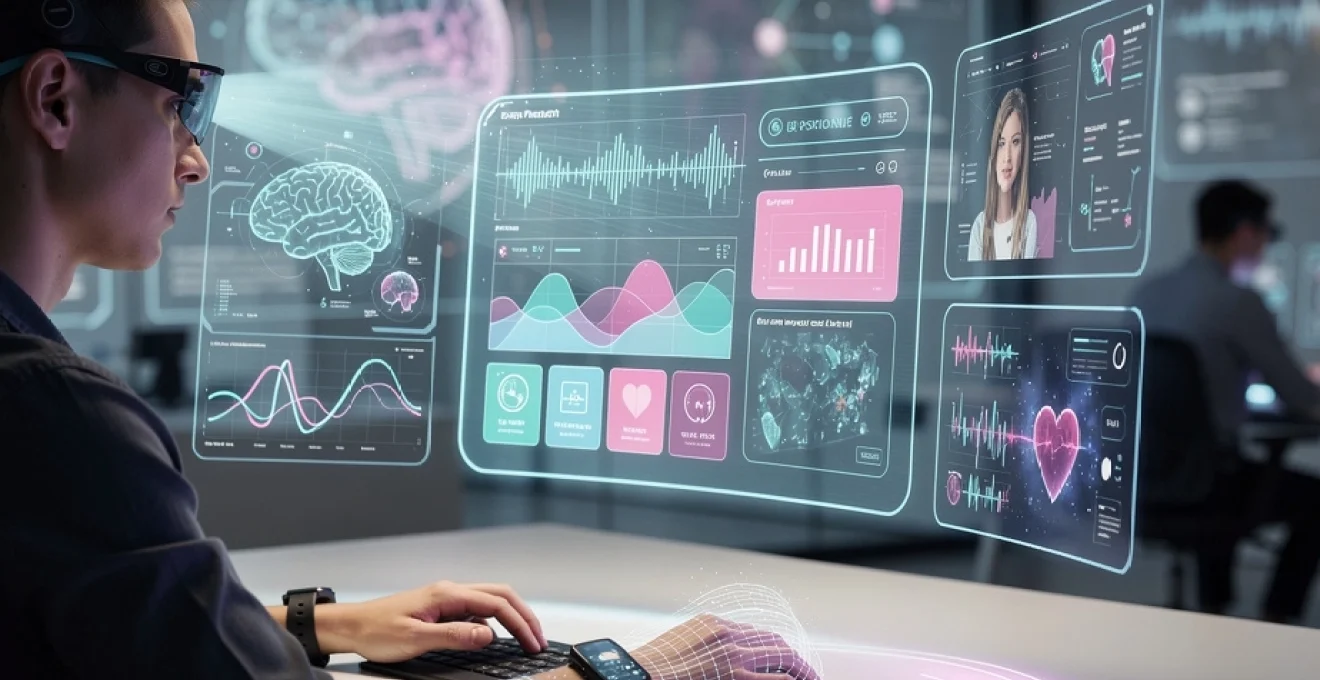
The intersection between human physiology and digital technology has reached an inflection point. Recent advances in sensor miniaturisation, machine learning algorithms, and real-time data processing have transformed biofeedback from a clinical curiosity into a viable user interface paradigm. As wearable sensors become increasingly sophisticated and affordable, the opportunity to create interfaces that respond not just to conscious input but to unconscious physiological states presents both exciting possibilities and significant challenges. The integration of neurophysiological data into everyday information systems represents a fundamental shift in how humans interact with technology, moving beyond traditional input methods towards systems that continuously adapt to your internal states, emotions, and cognitive workload.
Fundamentals of biofeedback technology in Human-Computer interaction
Biofeedback technology in human-computer interaction relies on capturing and interpreting physiological signals that reflect internal states otherwise invisible to external observation. These systems create closed-loop interactions where your body’s responses influence the behaviour of digital interfaces in real-time. Unlike traditional user interfaces that wait for deliberate input through keyboards, mice, or touchscreens, biofeedback-driven systems continuously monitor physiological parameters and adjust their functionality accordingly. This fundamental shift transforms the relationship between user and interface from reactive to anticipatory.
The effectiveness of biofeedback interfaces depends on several interconnected components: signal acquisition hardware, preprocessing algorithms to filter noise, feature extraction methods to identify meaningful patterns, classification or regression models to interpret physiological states, and adaptive interface mechanisms that translate these interpretations into appropriate system responses. Each component introduces potential points of failure or misinterpretation, making the design of robust biofeedback systems considerably more complex than traditional interface development. The challenge lies not merely in capturing physiological data, but in establishing reliable mappings between that data and meaningful interface adaptations that genuinely enhance user experience.
Electroencephalography (EEG) signal processing for Brain-Computer interfaces
Electroencephalography captures electrical activity generated by neural processes in the brain, providing direct insight into cognitive states, attention levels, and mental workload. Modern EEG systems for consumer applications typically use between 1 and 32 electrodes positioned on the scalp, measuring voltage fluctuations in the microVolt range at sampling rates between 128 and 512 Hz. The raw EEG signal contains multiple frequency bands, each associated with different mental states: delta waves (0.5-4 Hz) correlate with deep sleep, theta waves (4-8 Hz) with drowsiness and meditation, alpha waves (8-13 Hz) with relaxed wakefulness, beta waves (13-30 Hz) with active thinking, and gamma waves (30+ Hz) with heightened perception and consciousness.
Processing EEG signals for interface control requires sophisticated signal processing techniques to extract meaningful features from noisy data. Common approaches include Fast Fourier Transform (FFT) to decompose signals into frequency components, Common Spatial Pattern (CSP) filtering to enhance discriminative features between mental states, and Independent Component Analysis (ICA) to separate brain signals from artefacts caused by eye movements, muscle tension, or electrical interference. The challenge with EEG-based interfaces lies in achieving sufficient signal-to-noise ratios with non-invasive, dry electrode systems that users can don without trained assistance or conductive gel application.
Galvanic skin response (GSR) sensors and emotional state detection
Galvanic Skin Response, also known as electrodermal activity, measures changes in skin conductance caused by eccrine sweat gland activity, which is controlled by the sympathetic nervous system. When you experience emotional arousal—whether from stress, excitement, fear, or engagement—your skin conductance increases measurably, typically within 1-3 seconds of the stimulus. GSR sensors apply a small constant voltage across two electrodes placed on the skin surface and measure the resulting current flow, with higher conductance indicating greater arousal. The technology is relatively simple and affordable, making it one of the most accessible biofeedback modalities for consumer applications.
The primary limitation of GSR as an interface element is its inability to distinguish between different emotional valences—a spike in skin conductance might indicate fear, excitement, frustration, or intense concentration. This ambiguity requires combining GSR with contextual information or additional physiological signals to accurately interpret emotional states. Despite this limitation,
the ability of GSR to provide a rapid, continuous measure of arousal makes it a valuable component in multimodal biofeedback systems. When combined with facial expression analysis, heart rate variability, or contextual app data, GSR can help interfaces infer whether you are stressed, deeply engaged, or disengaged. For example, a productivity application could detect sustained high arousal during a task and gently prompt a break, or a game could adapt difficulty when your arousal drops below a certain threshold, indicating boredom. As user interface designers move towards emotion-aware systems, GSR will continue to serve as a foundational signal for emotional state detection, especially when interpreted alongside other physiological sensors.
Heart rate variability (HRV) monitoring through photoplethysmography
Heart rate variability (HRV) refers to the variation in time between consecutive heartbeats, and it is widely regarded as a non-invasive marker of autonomic nervous system balance. Rather than simply counting beats per minute, HRV analysis looks at subtle fluctuations in the inter-beat interval, which are influenced by the interplay between the sympathetic (« fight or flight ») and parasympathetic (« rest and digest ») branches of your nervous system. High HRV is typically associated with resilience, relaxation, and adaptive capacity, while low HRV can indicate stress, fatigue, or cognitive overload. Modern user interfaces access HRV primarily through photoplethysmography (PPG) sensors embedded in wearables such as smartwatches and fitness bands.
PPG works by shining light, usually from an LED, into the skin and measuring changes in reflected or transmitted light caused by blood volume fluctuations with each heartbeat. From this waveform, algorithms derive both heart rate and HRV metrics such as the root mean square of successive differences (RMSSD) or frequency-domain indices. When integrated into adaptive interfaces, HRV enables early stress detection through smartwatches, signaling when a user is becoming overwhelmed by task demands or experiencing prolonged stress. For example, an email client might notice sustained low HRV during heavy inbox triage and switch to a simplified view that reduces cognitive load. By monitoring HRV in real time, interface designers can build systems that proactively protect user well-being while maintaining productivity.
Electromyography (EMG) integration for gesture recognition systems
Electromyography (EMG) measures the electrical activity produced by skeletal muscles, offering a direct window into physical actions and subtle movements. Surface EMG sensors, which sit on the skin above muscles, capture voltage fluctuations generated when muscle fibers contract. In the context of human-computer interaction, EMG has emerged as a powerful tool for gesture recognition systems, enabling interfaces that respond to hand grips, finger taps, facial expressions, or even imagined movements. This is particularly impactful for users with motor impairments, where EMG can provide an alternative input channel when traditional devices are difficult or impossible to use.
EMG-based gesture recognition relies on detecting characteristic patterns in the muscle activity signals, often using machine learning models trained on labeled examples of specific gestures. For instance, a wearable armband can distinguish between hand poses such as pinch, fist, or open palm, and map them to commands like scroll, click, or zoom. Compared to camera-based gesture tracking, EMG offers advantages in low-light conditions and in scenarios where privacy or occlusion is a concern. As sensor miniaturisation continues, EMG integration could allow everyday objects—from steering wheels to gaming controllers—to sense your intent directly from muscle tension, enabling more fluid, low-latency interaction with digital systems.
Current commercial applications of biofeedback-driven interfaces
Although many biofeedback technologies emerged from clinical and research settings, they are now firmly embedded in mainstream consumer devices. From meditation headbands that visualize your brainwaves to smartwatches that flag elevated stress, biofeedback-driven interfaces are quietly reshaping expectations around personal technology. These commercial systems offer a glimpse into how future user interfaces might adapt in real time to your mental and physiological state. They also provide valuable real-world data on usability, adoption, and long-term engagement—factors that academic prototypes often cannot fully capture.
By examining existing products, we can better understand both the opportunities and limitations of biofeedback in everyday interaction design. Commercial devices must grapple with constraints such as battery life, sensor comfort, cost, and data privacy, leading to pragmatic design trade-offs. At the same time, their widespread distribution generates unprecedented volumes of physiological data, which can be used to refine algorithms and explore new interaction paradigms. Let us look at several representative examples that illustrate how biofeedback technology is already influencing user interfaces today.
Neurosky MindWave and muse headband in consumer Brain-Computer interaction
Devices like the NeuroSky MindWave and the Muse headband have brought Brain-Computer Interface (BCI) concepts out of the lab and into living rooms and offices. These consumer EEG headsets use a limited number of electrodes to estimate metrics such as attention, relaxation, and meditation depth, which are then translated into interactive experiences. In meditation apps, for example, you might hear calm audio feedback when your brainwaves reflect a relaxed state, and more stimulating sounds when your mind wanders. This creates a closed feedback loop where the interface guides you toward desired mental states in real time.
While the signal quality of consumer EEG devices is lower than that of research-grade systems, their simplicity and affordability have made them popular platforms for experimentation. Developers have created games where you move objects with your « mind, » educational tools that adapt difficulty based on attention levels, and productivity apps that track focus across the workday. These applications highlight both the promise and pitfalls of consumer BCI: although attention and relaxation scores can be noisy and context-dependent, they offer enough signal to shape engaging, biofeedback-driven interfaces. As future iterations improve electrode design and onboard processing, we can expect more seamless integration of EEG-derived insights into everyday user experiences.
Empatica E4 wristband for stress-adaptive mobile applications
The Empatica E4 wristband exemplifies how research-grade physiological sensing can power stress-adaptive interfaces outside the lab. Equipped with PPG for heart rate, electrodermal activity sensors for GSR, temperature measurement, and motion tracking, the E4 streams rich physiological data to connected devices. In clinical research, it is widely used to detect stress episodes, monitor autonomic arousal, and analyze patterns associated with anxiety or epilepsy. When integrated with mobile applications, these signals can enable interfaces that respond intelligently to your stress levels and emotional engagement.
Imagine a mobile app that notices your skin conductance and heart rate rising during a high-stakes email or late-night work session. Instead of simply recording these metrics, a stress-adaptive interface could dim notification intensity, suggest a breathing exercise, or postpone non-urgent alerts until your physiology returns to baseline. The E4 has already been used in studies where real-time stress detection triggers adaptive interventions, demonstrating how multi-sensor biofeedback can inform interface behavior. Although the device is currently targeted at researchers and specialized use cases, its design principles—continuous multimodal sensing and context-aware adaptation—foreshadow capabilities likely to appear in mainstream wearables.
Tobii eye tracking technology in gaming and accessibility interfaces
Tobii eye tracking technology showcases how physiological measures beyond heart rate and brainwaves can redefine user interaction. By precisely tracking gaze direction, fixation duration, and saccades, Tobii-enabled systems can infer where your attention is focused on the screen. In gaming, this allows mechanics where you aim or select targets simply by looking at them, reducing reliance on traditional controllers and creating more immersive experiences. Some titles already use eye tracking to dynamically adjust camera angles, highlight objects of interest, or adapt difficulty based on how long you spend scanning specific areas.
Beyond entertainment, Tobii devices play a crucial role in accessibility interfaces for users with motor impairments. Eye-controlled communication boards and on-screen keyboards allow individuals with limited movement to type, browse, and control software using only their gaze. This turns the eyes into a primary input modality, blurring the line between biofeedback and direct control. As eye tracking becomes more discreet—integrated into laptop bezels, VR headsets, and AR glasses—it will further influence interface design patterns. We may soon take for granted that applications can sense not only what you click, but what you look at, hesitate over, or ignore entirely.
Apple watch biometric sensors in adaptive user experience design
The Apple Watch and similar smartwatches have normalized continuous biometric monitoring for millions of users, creating fertile ground for adaptive user experience design. Using PPG-based heart rate sensing, accelerometers, gyroscopes, and, in newer models, blood oxygen and skin temperature sensors, these devices capture a high-resolution picture of your daily physiological rhythms. Current interfaces already use this data for features like activity rings, irregular heart rhythm notifications, and guided breathing reminders triggered by elevated heart rate during inactivity. However, the potential for biofeedback-driven user interfaces extends well beyond wellness notifications.
As app developers gain more granular access to biometric trends, they can design interfaces that subtly adjust to your state. A productivity app might prioritize simpler tasks or switch to a focus mode when your heart rate and motion data suggest fatigue. A reading app could detect increased restlessness and suggest an audio version of the content instead. Because smartwatches are worn throughout the day, they offer a continuous feedback channel that can inform context-aware decisions across your device ecosystem. The Apple Watch thus serves as a bridge between isolated fitness tracking and fully integrated biofeedback-enhanced user experiences.
Neuroadaptive systems and real-time interface modification
Neuroadaptive systems take biofeedback a step further by continuously estimating your cognitive and emotional state and adapting interface behavior in real time. Instead of relying solely on explicit user preferences or one-time configurations, these systems treat your brain and body signals as dynamic input channels. The goal is to create interfaces that feel less like rigid tools and more like responsive partners, adjusting complexity, pacing, and modality based on your current mental workload and affect. This vision raises practical questions: how accurately can we infer states like mental fatigue or sustained attention, and how quickly should interfaces respond?
Research over the past decade has shown that combining modalities such as EEG, HRV, GSR, and eye tracking can yield reasonably robust estimates of cognitive workload and engagement in controlled settings. Translating these findings into everyday applications, however, requires careful consideration of user trust, transparency, and control. Users should understand when and why an interface is adapting, and they must be able to override or tune these behaviors. With that in mind, we can explore specific neuroadaptive approaches that are beginning to influence future user interface design.
Cognitive workload assessment using functional Near-Infrared spectroscopy (fNIRS)
Functional Near-Infrared Spectroscopy (fNIRS) is a neuroimaging technique that measures changes in blood oxygenation in the cortex, providing a proxy for local brain activity. By shining near-infrared light into the scalp and detecting how much is absorbed or scattered, fNIRS systems can infer activation patterns associated with mental effort, working memory load, and sustained attention. Unlike fMRI, fNIRS devices can be relatively compact and portable, making them candidates for integration into headbands, caps, or even AR headsets. For user interfaces, this opens the door to more direct assessments of cognitive workload during interaction.
In experimental setups, fNIRS has been used to adjust task difficulty in real time, such as by simplifying cockpit displays when a pilot’s prefrontal workload exceeds a threshold. Similar principles could apply to complex software dashboards, industrial control systems, or advanced learning platforms. If your fNIRS data indicated sustained high workload, an interface could temporarily hide non-essential widgets, delay low-priority alerts, or switch to more guided workflows. While current fNIRS hardware is still too cumbersome for mass-market adoption, ongoing miniaturisation suggests a near future where cognitive workload assessment becomes an integral part of neuroadaptive user interfaces.
Attention-responsive content delivery in digital learning platforms
Digital learning platforms are particularly well suited to benefit from attention-responsive interfaces driven by biofeedback. Using signals such as EEG-based engagement indices, eye tracking metrics, and heart rate variability, these systems can estimate when your attention is drifting or when material is too easy or too difficult. Instead of presenting a fixed sequence of content, an attention-aware platform could slow down, repeat explanations, or insert micro-quizzes when it detects waning focus. Conversely, when your physiological signals suggest high engagement and low cognitive strain, the system could accelerate the lesson or introduce more challenging problems.
Think of it as a tutor that watches not only what answers you give, but how your body responds as you work through the material. This can help prevent cognitive overload while maintaining optimal challenge, a key ingredient in effective learning. Of course, such adaptation must be implemented with care to avoid overfitting to transient fluctuations or misinterpreting signals—brief stress spikes may sometimes correlate with productive struggle rather than confusion. By combining biofeedback with performance analytics and user feedback, digital learning interfaces can evolve toward truly personalized, state-aware educational experiences.
Affective computing models for emotion-driven interface personalisation
Affective computing focuses on recognizing, interpreting, and responding to human emotions through computational systems. In the context of biofeedback technology, affective models integrate physiological signals—such as GSR, HRV, EEG rhythms, facial expressions, and voice prosody—to estimate emotional states like calmness, frustration, or excitement. These estimates can then drive interface personalization in subtle but meaningful ways. For instance, a creative writing app might switch to a minimal, low-stimulation layout when it detects signs of anxiety, while a fitness app could adapt music tempo and on-screen encouragement based on your arousal level.
To manage the ambiguity inherent in physiological signals, modern affective computing models often rely on machine learning techniques trained on large, multimodal datasets with self-reported emotional labels. These models do not « read minds, » but they can identify patterns that correlate with particular affective states in specific contexts. For user interfaces, the key is to design adaptations that respect user autonomy and avoid inappropriate inferences. Emotion-driven personalization should feel like a helpful, empathetic adjustment, not an intrusive judgment. As more data becomes available from consumer devices, affective computing is likely to play a central role in shaping the next generation of emotionally intelligent user interfaces.
Machine learning algorithms for biofeedback pattern recognition
Biofeedback-driven interfaces depend heavily on machine learning algorithms to transform raw physiological signals into actionable insights. Unlike traditional input devices, where a keypress or mouse click has a clear, discrete meaning, signals from the brain, heart, skin, or muscles are continuous, noisy, and context-dependent. Pattern recognition methods help extract salient features, classify states, and predict user behavior in ways that can be mapped to interface adaptations. Choosing the right algorithm involves balancing accuracy, interpretability, computational cost, and robustness to individual differences.
In practice, many systems use a combination of traditional machine learning techniques and deep learning approaches, often stacked in multi-stage pipelines. For example, handcrafted features derived from time and frequency domains may feed into Support Vector Machines, while raw or minimally processed signals are passed through deep neural networks for representation learning. Reinforcement learning can then operate at a higher level, deciding when and how the interface should adapt based on user feedback. Let us explore how some of these key algorithmic families contribute to biofeedback pattern recognition.
Support vector machines (SVM) in physiological signal classification
Support Vector Machines (SVM) have long been a staple in physiological signal classification due to their strong performance on high-dimensional, small-to-medium-sized datasets. By finding an optimal separating hyperplane between classes in a transformed feature space, SVMs can differentiate between states such as high versus low arousal, relaxed versus focused attention, or different EMG-based gestures. Kernel functions allow SVMs to model non-linear relationships without explicitly computing complex feature mappings, which is particularly valuable for noisy, overlapping physiological data.
In user interface applications, SVMs often serve as the workhorse classifiers that translate engineered features into discrete control signals. For example, an SVM might continuously classify your mental workload based on EEG power bands and feed that information into an adaptive dashboard. Their relatively low computational overhead makes them suitable for real-time operation on embedded devices and wearables. However, SVM performance depends strongly on feature quality and parameter tuning, which means careful preprocessing and cross-validation are essential. As datasets grow larger and more diverse, there is a trend toward complementing SVMs with more flexible deep learning models, while still leveraging their robustness in constrained environments.
Deep neural networks for multi-modal biometric data fusion
Deep neural networks (DNNs) excel at learning hierarchical representations from raw or minimally processed data, making them well suited for multi-modal biometric data fusion. When combining EEG, HRV, GSR, eye tracking, and motion data, handcrafting features that capture all relevant interactions becomes extremely challenging. DNN architectures, such as fully connected networks, recurrent networks, and transformers, can ingest parallel streams of signals and learn shared embeddings that encode cross-modal correlations. This allows for more accurate and nuanced predictions of user states than single-modality models.
For biofeedback-enhanced interfaces, multi-modal fusion is critical because no single physiological signal offers a complete picture of your mental and emotional state. A deep model might learn, for instance, that a specific pattern of increased heart rate, subtle EMG tension, and shorter eye fixations correlates with frustration during form filling. The interface could then simplify the form, provide inline assistance, or offer an alternative interaction flow. While deep learning can significantly boosting accuracy, it also introduces challenges related to explainability, data requirements, and energy consumption on resource-constrained devices. Designers must therefore balance the benefits of richer models against the practical constraints of real-world deployment.
Reinforcement learning in adaptive interface optimisation
Reinforcement learning (RL) offers a powerful framework for optimizing adaptive interfaces over time based on user feedback and implicit behavioral signals. Instead of hard-coding how an interface should react to particular biofeedback patterns, RL agents learn policies that maximize a reward function, such as user performance, engagement, or self-reported satisfaction. The system observes states derived from physiological and interaction data, takes actions by modifying interface elements, and receives feedback as users interact. Over many iterations, the agent discovers which adaptations are most beneficial in different contexts and for different individuals.
Consider an email client that experiments with different ways of batching notifications, adjusting layout density, or suggesting short breaks based on real-time stress indicators. An RL algorithm could gradually identify strategies that reduce perceived overload without hurting responsiveness. One important consideration is that users are not static environments: their preferences, routines, and physiological baselines evolve. RL methods must therefore incorporate mechanisms for continual learning and exploration while avoiding disruptive or confusing changes. When combined with biofeedback, reinforcement learning can help create interfaces that feel increasingly tailored to you, not just in appearance but in behavior.
Convolutional neural networks (CNN) for EEG signal feature extraction
Convolutional neural networks (CNNs), originally developed for image recognition, have been successfully adapted for EEG signal analysis and feature extraction. By treating EEG as a multi-channel time series or as spectrogram-like images, CNNs can learn spatial and temporal filters that capture relevant patterns across electrodes and frequency bands. This approach reduces reliance on manual feature engineering techniques such as handcrafted band-power ratios or CSP filters, enabling end-to-end models that directly map raw EEG segments to cognitive or affective states.
In Brain-Computer Interface applications, CNN-based models have achieved competitive performance on tasks like motor imagery classification, mental workload estimation, and error detection. For user interfaces, this means more accurate and potentially more robust inference of user intent and state, even with noisy consumer-grade EEG hardware. For example, a CNN could learn to detect subtle signatures of mind wandering during reading or coding tasks and prompt gentle refocusing interventions. As computational power on edge devices improves, we can expect CNNs to become a core component of real-time EEG processing pipelines for neuroadaptive interfaces.
Privacy and ethical considerations in biometric user interface design
Integrating biofeedback into user interfaces raises profound privacy and ethical questions that go beyond traditional concerns about clickstreams and location data. Physiological signals can reveal sensitive information about your health, mood, stress levels, and even cognitive vulnerabilities. Unlike a password or a profile field, you cannot easily change your heart rate patterns or brain activity, which makes biometric data uniquely personal and potentially persistent. Designers and organizations must therefore treat these signals with a high degree of care, transparency, and respect for autonomy.
Key ethical principles include informed consent, data minimization, and purpose limitation. Users should clearly understand what physiological data is being collected, how it will be used, and whether it will be shared with third parties. Interfaces should collect only the signals necessary for a given feature and store them securely, ideally with strong encryption and anonymization techniques. Moreover, there is a risk of manipulation: if an interface can infer when you are vulnerable, it could be misused to push persuasive content or exploit impulse-driven behaviors. To prevent such outcomes, regulatory frameworks and industry standards need to evolve in tandem with technological capabilities, ensuring that biofeedback-enhanced interfaces empower users rather than surveil or nudge them without consent.
Future integration scenarios for biofeedback-enhanced interfaces
Looking ahead, biofeedback technology is likely to become increasingly woven into the fabric of everyday interaction, moving from standalone gadgets to deeply embedded capabilities in devices and environments. As sensors shrink and signal processing algorithms improve, the distinction between « traditional » and « biofeedback » interfaces will blur. You might not think of your AR glasses or smart home system as physiological computing platforms, yet they could continuously adapt to your stress levels, focus, and emotional responses. What kinds of scenarios could this enable, and how might they reshape our expectations of digital systems?
Future integration will hinge on seamless, unobtrusive sensing combined with trustworthy, user-centric design. Rather than bombarding you with biometric metrics, successful interfaces will translate biofeedback into subtle, context-aware adjustments that feel natural and supportive. At the same time, users will demand clearer controls over when and how their body data is used. With these caveats in mind, we can envision several concrete directions where biofeedback-enhanced interfaces may soon become commonplace.
Augmented reality headsets with integrated neuroimaging capabilities
Augmented Reality (AR) headsets are poised to become a major platform for integrating biofeedback and neuroimaging capabilities. Future devices could embed EEG or fNIRS sensors into the headband or temple areas, enabling continuous estimation of attention, workload, and emotional engagement as you interact with digital overlays. Imagine an AR productivity environment that dims secondary windows, enlarges key widgets, or simplifies instructions when it detects rising cognitive load. Conversely, during low-demand periods, the system might surface learning modules, recommendations, or creative prompts tailored to your current state.
In collaborative scenarios, AR headsets could share high-level indicators of participants’ engagement or confusion, helping teams synchronize pace and clarify misunderstandings more quickly. Of course, such features would require rigorous safeguards to protect privacy and prevent misuse, as sharing neurophysiological data raises sensitive ethical issues. Still, the combination of spatial computing and neuroadaptive feedback has the potential to create interfaces that feel remarkably fluid, as if the virtual content were not just anchored in physical space but also responsive to your internal mental landscape.
Haptic feedback systems driven by sympathetic nervous system responses
Haptic feedback systems—vibration motors, pressure actuators, and wearable tactors—offer a rich channel for delivering subtle, embodied feedback based on your sympathetic nervous system responses. By monitoring signals such as GSR, HRV, and EMG, interfaces can infer when your arousal or muscle tension crosses certain thresholds and respond with supportive tactile cues. For instance, a steering wheel or gaming controller could gently pulse when it detects sustained high arousal, prompting you to relax your grip and breathing. This is analogous to a friend placing a reassuring hand on your shoulder when they sense you are tense.
Wearable haptic bands or vests could also guide users through breathing exercises or relaxation protocols, synchronizing vibration patterns with optimal inhale-exhale rhythms during stressful situations. In virtual and augmented reality, haptic systems driven by physiological responses could create more immersive and emotionally attuned experiences—for example, modulating environmental effects based on your heart rate to maintain engagement without triggering overwhelming stress. As designers explore these possibilities, they must ensure that biofeedback-based haptics remain gentle and opt-in, avoiding scenarios where users feel physically nudged or manipulated without clear consent.
Voice assistants with prosodic analysis and stress detection
Voice assistants are already central to how many people interact with technology, and adding prosodic analysis and stress detection can make these interfaces more empathetic and context-aware. By analyzing features such as pitch, speech rate, volume, and pause patterns, algorithms can infer when you are rushed, frustrated, or calm—even without explicit biometric sensors. Combined with optional physiological inputs from wearables, voice-based systems could adapt their responses to your current state, offering shorter answers when you are stressed or more detailed explanations when you appear relaxed and curious.
Imagine asking your assistant to schedule a meeting while your voice trembles and your heart rate spikes. Instead of proceeding as usual, a stress-aware assistant might confirm the most critical details, avoid additional promotional suggestions, and optionally ask whether you want a quick breathing exercise afterward. However, this level of sensitivity carries significant privacy implications, as your voice becomes a rich source of emotional and health-related data. To build trust, voice assistant platforms will need to provide transparent controls, on-device processing options, and clear boundaries on how prosodic and biometric insights are used. Done right, prosody-aware assistants could transform voice interfaces from purely transactional tools into genuinely supportive companions that respect both your time and your emotional well-being.