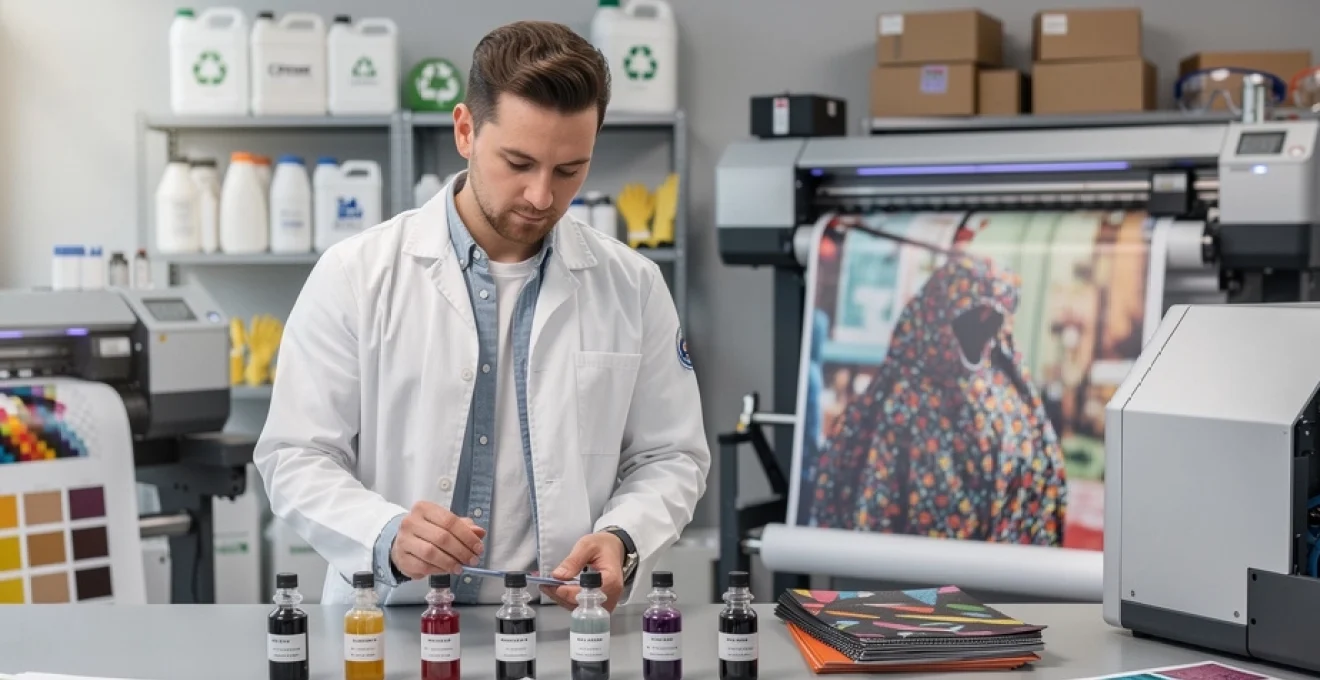
The printing industry’s rapid evolution has made ink selection one of the most critical decisions facing print professionals today. With the global ink market projected to reach £21.4 billion by 2024, driven by technological advancements and sustainability demands, understanding the nuances of ink chemistry and performance characteristics has never been more crucial. Modern printing applications require precise ink matching to achieve optimal colour reproduction, substrate adhesion, and durability across diverse commercial applications.
Professional printers operating in today’s competitive landscape must navigate an increasingly complex array of ink formulations, each engineered for specific printing technologies and substrate requirements. From the molecular structure of pigment-based systems to the environmental considerations of eco-solvent formulations, every aspect of ink selection directly impacts print quality, production efficiency, and operational costs. The challenge lies not merely in choosing between different ink types, but in understanding how each formulation’s unique properties align with specific printing objectives and substrate characteristics.
Digital vs offset printing ink chemistry and performance characteristics
Digital and offset printing technologies utilise fundamentally different ink chemistries, each optimised for their respective printing mechanisms and performance requirements. Digital printing inks are typically formulated with lower viscosity to facilitate smooth flow through print heads, whilst offset inks require higher viscosity to maintain proper ink transfer through the complex roller system. This fundamental difference in rheological properties drives numerous downstream implications for colour reproduction, drying characteristics, and substrate compatibility.
The particle size distribution in digital inks typically ranges from 50-200 nanometres, significantly smaller than offset ink pigments which average 500-1000 nanometres. This size differential impacts colour saturation, with digital inks often achieving superior colour vibrancy due to improved light scattering properties. However, offset inks compensate with superior opacity and coverage characteristics, particularly important for solid colour areas and text reproduction.
Pigment-based inks for HP designjet and canon imagePROGRAF series
Pigment-based ink formulations represent the gold standard for professional wide-format printing applications, particularly in HP Designjet and Canon imagePROGRAF series printers. These inks utilise insoluble pigment particles suspended in a carefully engineered carrier system, delivering exceptional lightfastness ratings often exceeding 100 years under standard display conditions. The pigment particles sit primarily on the substrate surface, creating prints with superior archival properties and resistance to environmental degradation.
Canon’s LUCIA PRO pigment ink system incorporates 12-colour formulations with specialised chroma optimiser technology, enabling expanded colour gamuts approaching 99% of the Adobe RGB colour space. The inclusion of multiple grey inks reduces metamerism in neutral tones, whilst the Red and Blue pigment additions extend the printable colour range significantly beyond traditional CMYK limitations. Print longevity studies demonstrate that these pigment systems maintain colour accuracy for decades when properly stored and displayed.
Dye-based ink formulations in epson SureColor production lines
Epson’s SureColor production printers predominantly utilise dye-based ink chemistry, where colourants are dissolved at the molecular level within the carrier fluid. This complete dissolution enables superior colour saturation and smooth tonal gradations, particularly beneficial for photographic reproduction and gradient-heavy applications. Dye-based inks penetrate deeper into porous substrates, creating more vibrant colours but potentially reducing longevity compared to pigment alternatives.
The UltraChrome ink technology employed across SureColor lines incorporates advanced encapsulation techniques to improve dye stability whilst maintaining the inherent vibrancy advantages. Epson’s latest formulations include light cyan and light magenta variants that reduce grain in highlight areas, whilst maintaining the 10-colour configuration that enables exceptional skin tone reproduction.
The molecular-level dispersion of dye-based inks creates unmatched colour brilliance, though careful substrate selection remains crucial for optimal performance and longevity.
Uv-curable ink systems for roland DG and mimaki Wide-Format printers
UV-curable ink systems represent a revolutionary approach to wide-format printing, particularly in Roland DG TrueVIS and Mimaki J
UV printers, curing systems, and ink chemistries work together as a tightly integrated system, where photoinitiators in the ink react to high‑intensity UV LED lamps to form an instant polymer network. This rapid polymerisation locks pigments onto the substrate surface, producing prints that are dry to the touch as they leave the printer, even at high production speeds. For Roland DG and Mimaki wide-format printers, UV-curable inks enable direct printing onto rigid boards, flexible films, acrylic, metal, and coated glass without additional priming in many cases. The result is a highly durable, scratch-resistant image layer with excellent chemical resistance, making UV-curable inks ideal for signage, industrial labels, and packaging prototypes.
One of the defining advantages of UV-curable ink systems is their ability to maintain sharp detail and colour density on non-porous substrates where water-based or solvent inks would struggle to anchor. Because curing is driven by light rather than absorption or evaporation, dot gain is tightly controlled, supporting fine text and complex vector graphics. Roland and Mimaki have also introduced flexible UV ink variants designed to stretch with media such as self-adhesive vinyl, preventing cracking during installation. From a performance standpoint, UV-curable inks reduce turnaround times, expand substrate choice, and deliver robust outdoor durability, albeit at the cost of higher initial equipment investment and more complex maintenance routines.
Solvent-based ink technologies in mutoh ValueJet applications
Solvent-based ink technologies remain a cornerstone for outdoor graphics, vehicle wraps, and long-life signage, particularly in Mutoh ValueJet platforms. These inks use organic solvents as carriers, which soften the surface of PVC and similar plastics, allowing the pigment to penetrate slightly and form a highly durable bond. The result is excellent abrasion resistance, strong weatherability, and water-resistant prints that can withstand years of outdoor exposure without lamination in many applications. Traditional “hard” solvents are being progressively replaced by mild-solvent and eco-solvent formulations to reduce volatile organic compound (VOC) emissions and odour.
Mutoh’s eco-solvent ink sets are optimised for high-speed production while maintaining a wide colour gamut and robust adhesion on coated and uncoated vinyls, banners, and speciality films. The slower evaporation rate of eco-solvent carriers compared with hard solvents improves print head reliability and reduces nozzle clogging, though it may require slightly longer drying or heating times. For print providers, solvent-based ink systems strike a pragmatic balance between durability, flexibility, and cost per square metre, especially where outdoor branding and fleet graphics dominate the workload. However, adequate ventilation, proper waste handling, and compliance with regional VOC regulations must be factored into any solvent-based print operation.
Substrate-specific ink selection for commercial printing applications
Once the printing platform has been chosen, the next critical step is aligning ink chemistry with substrate characteristics. The same ink that performs flawlessly on coated art paper can fail dramatically on uncoated stock, synthetic films, or textiles. Substrate-specific ink selection ensures that surface energy, porosity, and coating design are all matched to the drying and adhesion mechanisms of the chosen formulation. This approach not only improves print quality but also reduces waste, reprints, and customer complaints.
Commercial printers must therefore evaluate how ink interacts with the surface at both micro and macro scales. Factors such as ink holdout, dot spread, and penetration depth directly influence perceived sharpness and colour intensity. A structured testing protocol—combining draw‑downs, standardised colour targets, and rub or tape tests—provides objective data for selecting the right ink system for coated, uncoated, synthetic, or textile substrates. In many cases, the most profitable shops are those that treat ink–substrate compatibility as a technical discipline rather than an afterthought.
Coated paper compatibility with pantone matching system inks
Coated papers are engineered to minimise ink absorption and maximise surface reflection, making them ideal partners for Pantone Matching System (PMS) inks. The smooth, often clay-coated surface allows inks to sit closer to the top layer, enabling precise colour matching and consistent gloss levels. PMS spot inks on coated stock can reproduce brand colours with high accuracy, even in demanding applications such as luxury packaging, corporate stationery, and premium catalogues. Because ink sits higher on the surface, colour builds appear richer and more saturated with less ink film thickness.
For offset and digital offset presses, the combination of coated stock and PMS inks helps control dot gain and maintain fine detail in halftones, especially in small text and intricate logos. However, coated papers vary in their absorbency and coating hardness; gloss, silk, and matt grades can all respond differently to the same ink set. To ensure reliable Pantone colour reproduction, printers should calibrate press curves specifically for each coated grade and maintain consistent fountain solution and temperature conditions. When you need colour-critical printing on coated paper, PMS inks matched to a well-characterised substrate remain the benchmark solution.
Uncoated stock performance using process cyan, magenta, yellow, black (CMYK)
Uncoated papers, by contrast, are more porous and absorbent, causing process CMYK inks to penetrate deeper into the fibre structure. This absorption softens edges, increases dot gain, and typically lowers overall colour density compared with coated stock. As a result, the same CMYK build that appears vivid on a gloss art paper may look muted or “flatter” on an uncoated sheet. Designers and press operators must therefore adapt both artwork and press settings when targeting high-quality printing on uncoated stock.
From a technical perspective, compensating for dot gain through adjusted curves and lower ink densities is essential to avoid muddy midtones and blocked shadows. Many colour management workflows employ separate ICC profiles for uncoated papers, reducing total area coverage and rebalancing CMY to preserve neutrals. Where corporate colours must remain consistent across coated and uncoated materials—such as letterheads and business cards—spot PMS inks may be specified in addition to process CMYK. In practice, achieving reliable performance on uncoated papers is as much about managing expectations as it is about ink choice: warmer tones, softer contrast, and a more tactile aesthetic are often embraced rather than treated as limitations.
Synthetic media requirements for latex and eco-solvent formulations
Synthetic media such as PVC, polypropylene, polyester films, and polycarbonate sheets present unique challenges for ink adhesion and flexibility. Their low surface energy and non-porous nature mean that conventional water-based inks often fail to anchor effectively. Latex and eco-solvent formulations are engineered specifically to overcome these hurdles in synthetic substrate printing. Latex inks use water as the primary carrier but encapsulate pigments in a thermoplastic polymer that softens under heat and bonds to the media surface as it cools. Eco-solvent inks, as noted earlier, use mild organic solvents to swell the surface and embed pigments.
HP Latex and comparable systems from other manufacturers leverage elevated curing temperatures and optimised airflow within the printer to coalesce the latex layer without distorting heat-sensitive films. This produces odourless, flexible prints suitable for indoor environments where traditional solvents may be restricted. Eco-solvent systems, including those used on Mutoh and Roland platforms, typically require lower curing temperatures but may produce some residual odour, which must be managed in retail or interior décor contexts. When you are selecting ink for synthetic media, key questions include required outdoor durability, installation method (for example, conforming wraps versus flat applications), and any regulatory constraints regarding emissions or indoor air quality.
Textile printing considerations with reactive and acid dye inks
Textile printing introduces a further layer of complexity because inks must not only adhere to the surface but also bond chemically with the fibre to survive washing, rubbing, and perspiration. Reactive dye inks are primarily used on cellulose-based fibres such as cotton, viscose, and linen. These dyes form covalent bonds with hydroxyl groups in the fibre structure during a controlled steaming and washing process, delivering excellent wash fastness and vibrant colours. Acid dye inks, on the other hand, are optimised for protein fibres like silk and wool, as well as some synthetic polyamides, using ionic bonding mechanisms to achieve deep, saturated shades.
In both reactive and acid dye workflows, pre‑treatment of the fabric plays a crucial role in ink fixation and colour yield. The pre‑coat typically contains alkali, urea, and thickening agents that control ink penetration and promote the desired chemical reaction. After printing, controlled steaming times and temperatures determine how well the dyes bond to the fibres, while thorough washing removes unfixed dye and ancillary chemicals. Professional textile printers must therefore consider not only the ink and printer but also pre‑ and post‑processing equipment when specifying systems for fashion, home textiles, or soft signage. When executed correctly, reactive and acid dye inks deliver a soft hand feel, exceptional wash resistance, and a colour gamut that rivals or surpasses many pigment-based textile systems.
Colour gamut optimisation through strategic ink system selection
Colour gamut—the total range of colours a system can reproduce—is at the heart of print performance. Strategic ink system selection allows you to align the available gamut with the demands of your target applications. For photo-heavy work, dye-based and extended-gamut pigment sets (for example, CMYK plus light cyan, light magenta, orange, green, or violet) increase the ability to hit vibrant brand colours and nuanced skin tones. In contrast, high-opacity pigment and UV-curable systems may sacrifice a small portion of extreme saturation in exchange for better coverage, lightfastness, and substrate versatility.
Optimising colour gamut is not only about adding more colours; it is also about how those inks interact with the chosen substrate and printing technology. For instance, a 10‑colour pigment set on a low-grade uncoated paper may still underperform a 6‑colour system on premium coated media. Colour management workflows, including calibrated ICC profiles and device link transforms, ensure that the theoretical gamut of an ink set is translated into predictable, repeatable output.
In practice, the best colour gamut strategy balances ink complexity, maintenance overhead, and the specific colour demands of your customers—for many shops, a well-tuned 8‑colour system outperforms a poorly managed 12‑colour configuration.
As you evaluate ink systems from HP, Canon, Epson, Roland, Mimaki, and Mutoh, ask where your business derives most of its value: ultra-vivid retail graphics, colour-accurate proofing, long-life outdoor signage, or high-speed transactional work. Each of these segments places different emphasis on gamut volume, neutrals, and saturation versus cost efficiency and robustness. A practical approach is to build a reference library of printed colour charts on your core substrates, using each candidate ink set. Side-by-side comparisons under standard lighting conditions reveal not just theoretical differences but the real-world impact of ink system choice on colour gamut.
Print head compatibility and maintenance requirements across ink types
Print head design and ink chemistry are inseparable; using the wrong formulation can be as detrimental as running the wrong fuel in a high-performance engine. Thermal inkjet (TIJ) heads, as found in many desktop and some industrial systems, rapidly heat the ink to form vapour bubbles that eject droplets. These heads are generally optimised for water-based dye or pigment inks with tightly controlled viscosity and surface tension. Piezoelectric heads, common in Epson, Roland, Mimaki, and Mutoh equipment, flex mechanically to eject ink and can therefore handle a wider range of chemistries including solvent, UV, latex, and sublimation inks.
Because each ink type has different drying and curing mechanisms, maintenance regimes vary significantly. Solvent and eco-solvent inks can gradually thicken or form residues at the nozzle plate, increasing the risk of clogging if printers sit idle. UV-curable inks are even more sensitive to stray light and temperature fluctuations, requiring covered maintenance positions and regular purging to prevent partial curing within the head. Water-based pigment inks, while generally cleaner, may still precipitate or form agglomerates if environmental conditions deviate from the recommended range, particularly in low-humidity environments.
To preserve print head life and print quality, manufacturers define strict compatibility lists for approved inks, including OEM and selected third-party options. Deviating from these recommendations can compromise jetting performance, void warranties, and lead to premature head replacement—a major cost in wide-format and industrial systems. Practical maintenance routines typically include scheduled nozzle checks, automated cleaning cycles, capping station inspections, and periodic replacement of wipers or filters. In high-duty environments, some printers integrate recirculating ink paths to keep pigments in motion and reduce sedimentation, especially in white and metallic inks, which are more prone to settling.
Environmental and regulatory compliance in industrial ink selection
Environmental and regulatory considerations now play a decisive role in industrial ink selection, especially for packaging, décor, and textile applications. Regulations such as REACH in Europe, CPSIA in the United States, and various food-contact directives restrict the use of heavy metals, certain plasticisers, and hazardous solvents. As a result, many ink manufacturers have reformulated products to reduce VOC content, eliminate specific photoinitiators, and lower odour levels without compromising performance. Eco-solvent, latex, and low-migration UV inks have gained significant traction as brands and converters look to align with corporate sustainability targets.
For printers serving food, pharmaceutical, or cosmetic packaging markets, low-migration inks are critical to prevent components crossing the packaging barrier and contaminating the product. These formulations are tested under defined conditions of time, temperature, and simulant media to ensure compliance with EU Framework Regulation 1935/2004 and related guidelines. Textile printers targeting fashion or home textiles must also consider certifications such as OEKO‑TEX Standard 100, which verifies that finished garments are free from harmful levels of specific chemicals. Selecting compliant ink systems not only mitigates legal and reputational risk but can also open doors to premium markets where environmental credentials are a key differentiator.
From a broader sustainability perspective, water-based and latex inks offer advantages in indoor environments due to their lower odour and reduced VOC emissions, often enabling installation without extended off‑gassing times. However, even “green” ink technologies still require responsible waste management, including proper handling of waste ink, cleaning fluids, and contaminated rags. When you assess environmentally responsible ink options, it is useful to look beyond marketing labels and request formal safety data sheets (SDS), compliance declarations, and third‑party certifications. This documentation supports due diligence and can be shared with corporate clients who increasingly demand transparency in their supply chains.
Cost-performance analysis of premium vs standard ink formulations
Ink cost is one of the most visible line items in any print operation, but focusing solely on price per litre can be misleading. Premium ink formulations typically command higher unit prices but often deliver superior yield, reduced waste, and fewer reprints due to better colour consistency and reliability. Standard or budget inks may appear attractive initially, yet can increase total cost of ownership through higher consumption, more frequent cleaning, or even damage to print heads. The true metric to consider is cost per sellable square metre or cost per job, rather than ink cost alone.
A structured ink cost-performance analysis should include variables such as average ink coverage, typical substrate mix, required durability, and acceptable defect rates. For example, if a premium eco-solvent ink allows a Mutoh ValueJet operator to print at higher speeds with fewer banding issues, the additional throughput and reduced rework may outweigh the higher cartridge price. Similarly, in proofing or high-value photographic work, the ability of a premium pigment set to hold colour within tight tolerances can translate directly into customer satisfaction and repeat business. In contrast, for low-volume, internal documents or temporary signage, standard inks may provide more than adequate performance at a lower overall cost.
One practical approach is to run controlled A/B tests between premium and standard inks on representative jobs, tracking not only ink consumption but also setup time, cleaning cycles, and any quality-related reprints. Over a period of weeks, patterns emerge that reveal which formulations deliver the best value for your specific production environment. Many print providers ultimately adopt a tiered strategy, reserving premium inks for colour-critical or high-margin work and using standard inks where durability and fidelity demands are lower. By aligning ink choice with application requirements rather than adopting a single blanket policy, you can optimise both print performance and profitability.